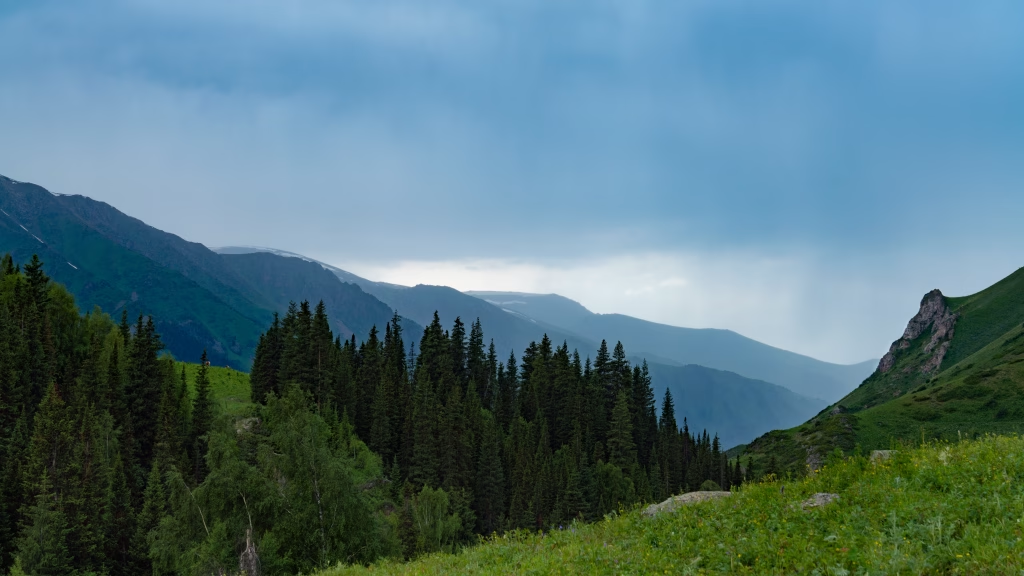
An ideal habitat on paper doesn’t always translate to reality. A recent camera trap survey, conducted with financial support from the CAMCA project, revealed that what should be Tien Shan argali territory near Zhongar-Alatau National Nature Park in Kazakhstan, might not be home to the species after all.
To assess the current distribution of one of CAMCA’s six flagship mountain species, the argali (Ovis ammon), CAMCA partner ACBK conducted a study of the northern territories adjacent to the Zhongar-Alatau National Nature Park to confirm whether a local population of argali was present. The camera traps were active from July 1 – 21, 2024 and were removed in August/September 2025.
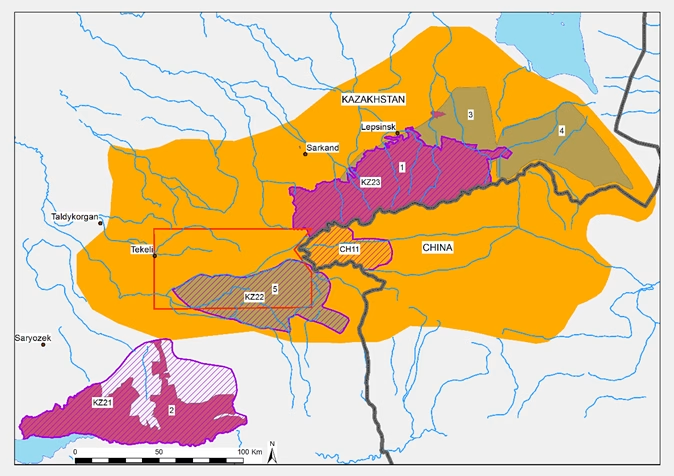
Map for reference 1- DA SNNP, 2-AltynEmel SNNP, 3- Lepsy SNR, 4-Tokty SNR, 5-Upper Koksu SNR, Orange – Djungarian eco corrdor
Tien Shan Argali
The argali is the largest wild sheep in Asia, distinguished by its powerful spiral horns (in males) and reddish-brown to gray coat. It inhabits the high mountain regions of Central Asia, including Altai, Sayan, Tien Shan, and Pamir ranges, preferring dry steppes, meadows, and mountain slopes.
The species is vulnerable and listed in the Red Data Books of Kazakhstan and the IUCN due to poaching and habitat loss. Three subspecies inhabit Kazakhstan:
- the “Karatau” subspecies in the Syr Darya Karatau ridge area,
- the “Tien Shan” subspecies in the Kazakh part of the Tien Shan, and
- the “North Kazakhstan” subspecies in the highlands up to the Irtysh, including Tarbagatai and Saur.
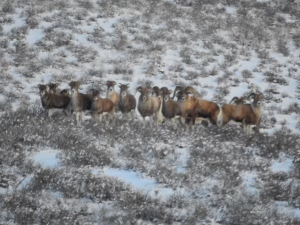
Of the three subspecies of argali inhabiting Kazakhstan, the Tien Shan argali (O. a. karelini) is widespread in the Tien Shan, including the Kungey Alatau.
Filling data gaps
The Lepsinsky and Toktinsky state nature reserves are state-owned zoological nature reserves in Kazakhstan, located at the northern foot of the Zhongar-Alatau mountain range. They were created to protect and restore rare species, including those listed in the Red Book and border the National Nature Park.
However, due to the peculiarities of legislation regulating protected areas in Kazakhstan, systematic wildlife population monitoring of these territories is lacking, which can lead to data gaps. To address this, additional data on argali and other animal species was collected in these areas, with the support of the scientific department of Zhongar-Alatau National Nature Park.
In addition to the survey’s main territories, part of the Dzungarian ecological corridor was also included, namely the low mountain ranges on the northwestern periphery of the Dzungarian region (Saihan, Arharly, Arganaty). According to the literature, the “Okhotzooprom” or specialized environmental protection organization for the protected area, and local hunting estates, a local population of argali has been previously documented there.
Camera traps were installed in these areas to collect data, but it also provided an opportunity to compare camera trap set-ups in adjacent territories – some where argali has been confirmed and other territories where their presence is uncertain. Although more information about which subspecies is present would also be helpful, it is very difficult to tell them apart in camera trap photos.
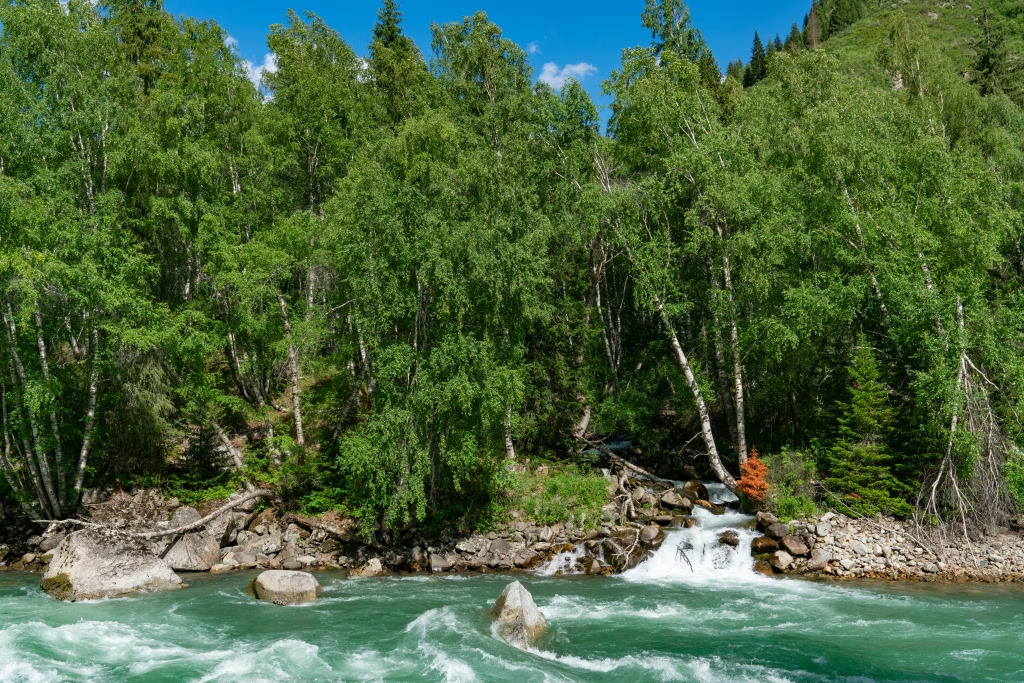
Setting up the survey
A total of 24 camera trap stations were installed, forming a network, and interviews were conducted with 10 informed residents (hunters, beekeepers, foresters, shepherds). Direct encounters with ungulates, other species of mammals, and large birds of prey were recorded. The camera traps were set up in habitats potentially suitable for argali, including outside the official boundaries of the nature reserves. Based on the interviews, the approximate area of the argali’s current habitat in the northern tip of Zhongar Alatau was estimated.
Results
In total, all 24 camera traps were deployed for over 5,644 “trap-days” (an estimate of how much effort is put into wildlife surveys using camera traps). 16 stations in the northern foothills of Zhongar Alatau (Lepsinsky and Toktinsky) collected over 105,000 images, while 8 stations in the low mountain ranges on the northwestern periphery of the park (Saihan, Arharly, and Arganaty) collected over 54,000 images. CAMCA project funds paid for the time and travel costs needed to maintain this camera trap network and analyse hundreds of thousands of images!
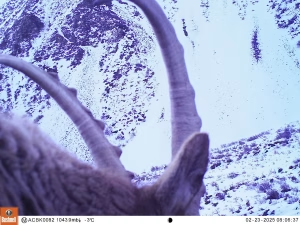
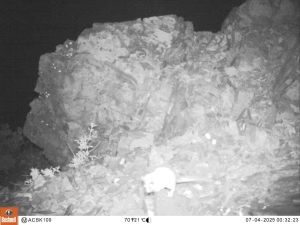
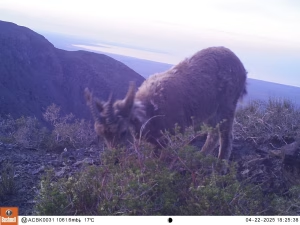
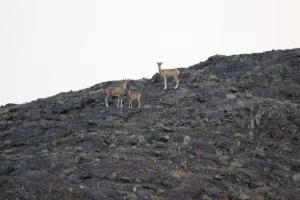
During the operation of the camera trap network, there were, unfortunately, no records of argali in the northern foothills (Lepsinksy and Toktinsky nature reserves). However, in the nearest low-mountain ranges of Sayan and Arganaty/Arkharly, argali were recorded in 7 out of 8 camera trap stations installed there (in Arganaty and Arkharly – 6 out of 6). This suggests that Tien Shan argali in Zhongar Alatau do not venture out of the park into the northern foothills (potentially due to human development activities).
In the low-mountain ranges (Sayan, Arganaty/Arkharly), argali was detected in areas with a high Relative Abundance Index (RAI). To calculate a relative abundance index, all detections for a single species are added together for all camera traps over all days, multiplied by 100, and divided by the total number of camera trap nights. The nearest distance between the camera trap stations within the network is only 23 km, indicating that if Argali is present, the camera trap effort and survey method (23 km spacing) would successfully find them.
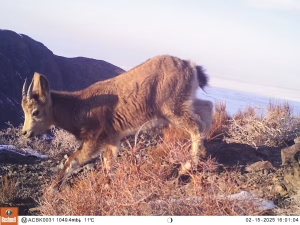
The only mountain-steppe ungulate that permanently inhabits a high-altitude belt is the Siberian ibex, but this competitor species also occupies all habitats that are also potentially suitable for the argali. Ibex was confirmed at 5 points – 31% of all camera trap stations in Lepsinksy and Toktinsky nature reserves (northern foothills) with a high occurrence rate and, for some points, a high RAI. The absence of argali in the foothills and the high occurrence of ibex here correspond to the survey data obtained last year (2024).
Conclusion and Next Steps
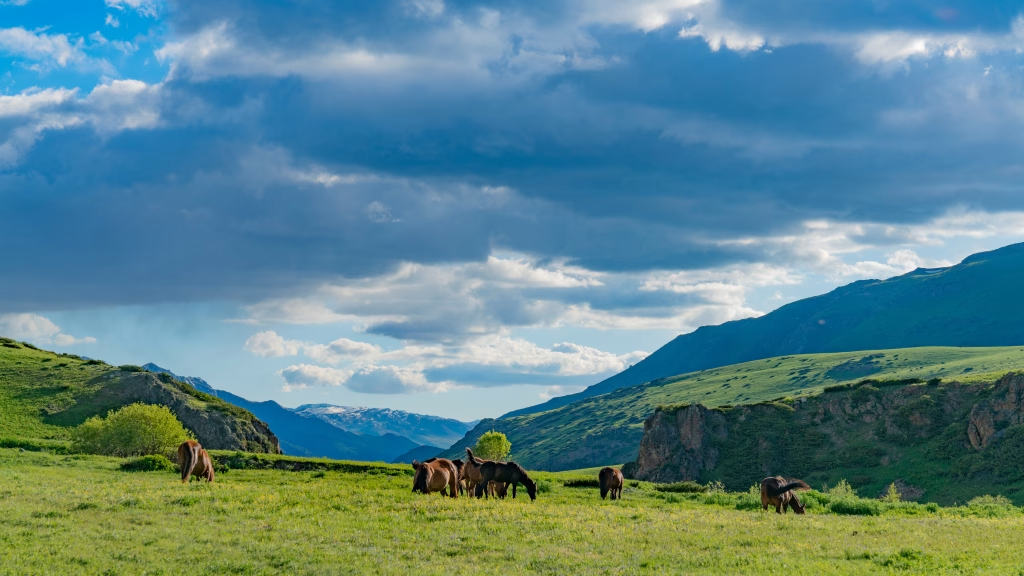
At the northern border of Zhongar Alatau National Nature Park, all the leveled elements of the landscape—hilly and rolling surfaces with, wide elongated depressions between ridges and plateau-like “spines” of ridges, were originally covered with various types of steppes and meadows and have since been developed and densely populated. These habitats, which are potentially suitable for argali, are in fact not used by argali, or are used to a small extent, which requires annual monitoring to determine.
Steep slopes of ridges and river valleys (often canyon-like), however, are not as developed, and data on the distribution of Siberian ibex and other mammals were obtained in these areas. This field data and knowing whether argali is present in historic parts of its habitat range, will help the Science Department of Zhongar-Alatau National Nature Park decide how to best conserve and connect argali habitats even outside its borders in the future.