One of the Central Asian Mammals and Climate Adaptation (CAMCA) project’s flagship species was the Bukhara deer (Cervus elaphus bactrianus), a subspecies found in Uzbekistan, Turkmenistan, Kazakhstan, and Tajikistan, and recorded in Afghanistan in the past. A typical inhabitant of the tugai floodplain forests, the Bukhara deer resides in areas containing mixed tugai with Asiatic poplar, oleaster, tamarisk, and reed thickets growing in the lower reaches of rivers.
From 2021 to 2025, the Tajikistan Nature Foundation (TNF) through the CAMCA project, worked to strengthen the conservation of key migratory mammal species like Bukhara deer in Central Asia through climate-informed management and evidence-based decision-making.
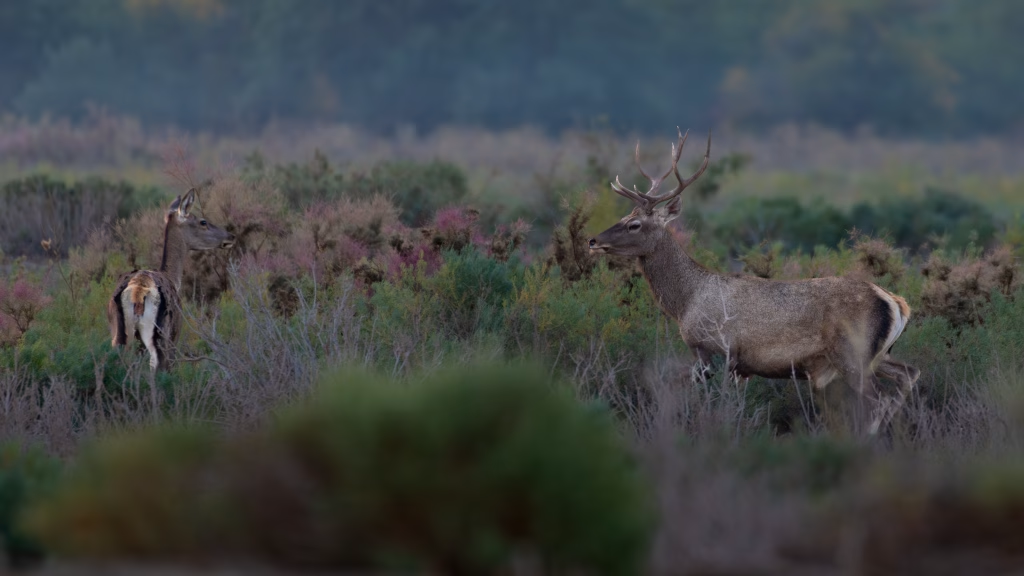
Bukhara deer in “Beshai Palangon” (Russian “Tigrovaya Balka”) State Nature Reserve (SNR). © TNF.
In recent years, there have been signs of recovery in parts of the species’ range, but the Bukhara deer remains under pressure from multiple threats, including poaching, habitat degradation (especially the decline of tugai forests), climate-related impacts, and the fragmentation of remaining populations. This is why the subspecies is listed as Critically Endangered (CR) in the Red Book of Tajikistan. Under the Central Asian Mammals Initiative (CAMI) of the Convention on the Conservation of Migratory Species of Wild Animals (CMS), a new conservation program for the species was launched, including efforts to assess population size. As a contribution to these regional efforts, TNF prioritized a clearer understanding of the deer’s status and distribution in Tajikistan within the CAMCA project.
Beshai Palangon State Nature Reserve: Remembering the past to protect the future
The most important habitat for the species in Tajikistan lies within the tugai ecosystems of Beshai Palangon State Nature Reserve. This is Tajikistan’s oldest desert–tugai reserve, established in 1938 to protect rare wildlife and preserve unique natural ecosystems.
The reserve’s name carries a memory: it honors the Caspian tiger (Panthera tigris virgata), a top predator that once lived there and is presumed to have gone extinct by the late 1950s. When the tiger was still present, it helped regulate prey populations, including Bukhara deer. Today, that missing predator–prey balance matters. If deer numbers drop too low, tugai forests can suffer because deer help disperse seeds and support biodiversity. But if the population grows too much, overgrazing can slow forest regeneration and degrade the habitat that the species depends on. In this way, the Bukhara deer is both essential for a healthy tugai ecosystem and, without natural regulation, a potential driver of habitat decline.
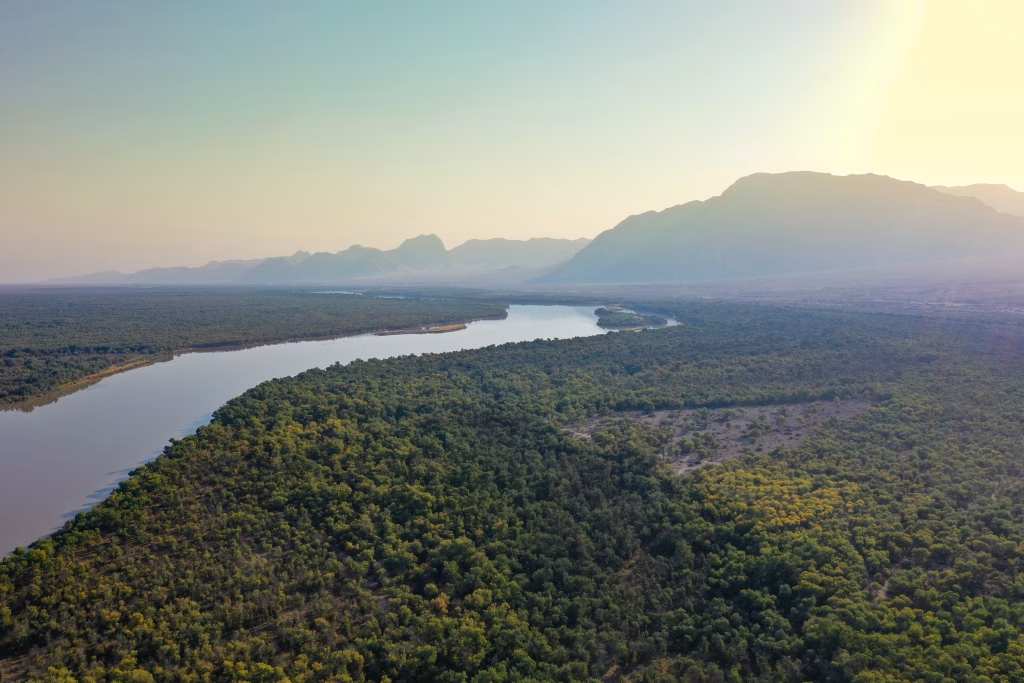
“Beshai Palangon” SNR. © TNF.
For many years, Bukhara deer numbers in Beshai Palangon State Nature Reserve were estimated using traditional field methods: route surveys to record animals and their tracks, counts of males during the rut, and other indirect approaches based on signs of activity. These methods offered valuable insights, but the results often carried high uncertainty, especially in dense vegetation where animals can remain hidden, making it difficult to confidently assess population size and spatial distribution.
To reduce uncertainty and strengthen the evidence for management decisions, TNF and specialists from the National Academy of Sciences of Tajikistan tested drone surveys with thermal imaging in Beshai Palangon State Nature Reserve for the first time. Equipped with a multi-camera system and thermal sensors, the drone offered a practical way to monitor deer in complex tugai forests by detecting their heat signature with minimal human effort and less disturbance.
The work was organized in two stages. At the beginning, the TNF team tested the drone and equipment available in Beshai Palangon State Nature Reserve, but lacked experience in defining the survey parameters, and most importantly using the thermal camera effectively. For this reason, cooperation with the ERA group, a company that develops and implements modern technologies for urban planning and agriculture, was essential, as they had the required expertise and technical capacity. At the end of February 2025, TNF and the ERA group conducted pilot flights in Beshai Palangon State Nature Reserve, testing both thermal imaging and conventional color (RGB) photography across areas with different vegetation covers. These trials helped define the best survey parameters, confirm the unmanned aerial vehicle’s (UAV) capabilities in tugai forests, and develop a clear protocol for counting Bukhara deer using the UAV.

The ERA group expert supported the team in developing the survey parameters. © TNF
Step by step, the team refined key elements of the survey: flight speed, altitude, and the best time of day for thermal detection, while aiming to minimize disturbances and observe deer behaving naturally. Night and early-morning surveys proved most effective, reducing false heat-related signals and improving detection in dense vegetation. The team also documented the species’ thermal “signature” to help distinguish Bukhara deer from other warm-blooded animals during analysis. After confirming these parameters through expert consultation and a review of published research, TNF developed an operational protocol and data-recording procedures and moved to the main survey.

The ERA group expert supported the team in the drone flights using determined survey parameters. © TNF.
The second stage, which was the full population count, took place from 9 to 13 September 2025, during the rut season. This is the period when males become more active and easier to detect: their behavior shifts as they search for females, vocalize more often (especially around dawn and dusk), and compete with rivals. Breeding success during this season influences the next generation and reflects overall population condition, making it an important window for monitoring.
Before fieldwork, the team planned the survey routes based on the pilot phase results and confirmed that triangular transects of about 5–6 km worked best. They then divided the area into grid cells. Using thermal drones at night and in the early morning, they completed 12 flights with consistent coverage and clear detections. Most sightings were in groups of 1 to 14 deer.
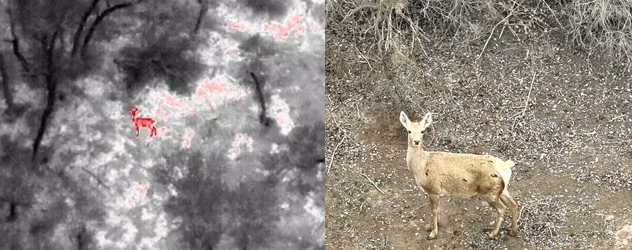
Bukhara deer in “Beshai Palangon” SNR. Thermal camera image (left side), Telephoto lens image (right side). © TNF.
TNF is now analyzing the collected data together with experienced specialists, including CAMCA project experts, to ensure reliable data processing and data management, as well as to develop a standard operating procedure (SOP) for future surveys. By improving detectability and reducing uncertainty, this approach strengthens the evidence base for management decisions in Beshai Palangon State Nature Reserve and contributes to broader CAMCA objectives on climate-informed conservation planning. It also offers a scalable method for repeat surveys, supporting long-term population monitoring and adaptive management for this Critically Endangered subspecies in Tajikistan.
TNF plans to finalize the methodology, ensure its applicability and reliability, and continue using it in the coming years for the Bukhara deer population estimation under the 1health4nature project.