

Safeguarding the traditions of the Yaghnobi people
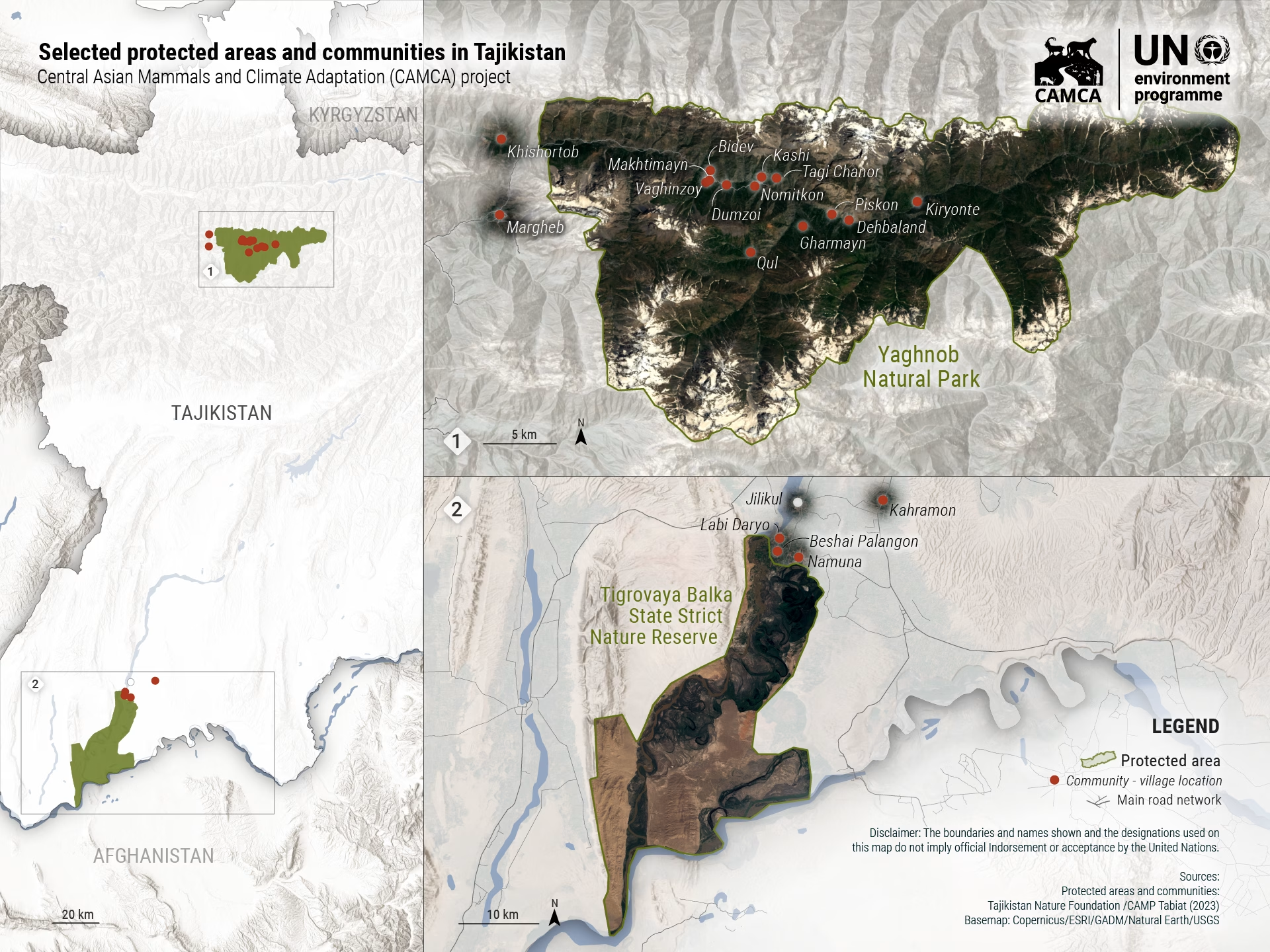
Yaghnob Natural Park lies in the Ayni district of Sughd region in Tajikistan, between the Zeravshan and Hissar mountain ranges. Established in 2019, the park covers around 57,000 hectares and aims to protect rich mountain biodiversity, conserve cultural heritage, and support research and sustainable tourism.
The park is especially important for the Yaghnobi people, an Indigenous community with a distinct language related to ancient Sogdian and traditions closely tied to the land. Farming and pastoralism have long shaped life in the valley, with households growing crops such as wheat, barley, and potatoes alongside breeding and seasonal livestock grazing. Safeguarding this biocultural heritage is a core goal of the park, ensuring that conservation efforts also support local ways of life.
Biodiversity and conservation
Species such as the Asiatic ibex (Capra sibirica), snow leopard (Panthera uncia), and Tian Shan brown bear (Ursus arctos isabellinus) depend on the valley’s rugged terrain and healthy ecosystems. The park’s establishment has created new opportunities to protect both biodiversity and cultural landscapes while reducing pressure on land degradation. Ongoing conservation work includes wildlife monitoring, particularly for snow leopards, using methods such as camera trapping and field surveys to a better understanding of species distribution and population trends.
A strong focus is placed on co-management, where local communities are actively involved in conservation. Community-based wildlife monitoring, awareness-raising, and sustainable tourism initiatives help build local capacity while supporting biodiversity protection.




Climate impacts and threats
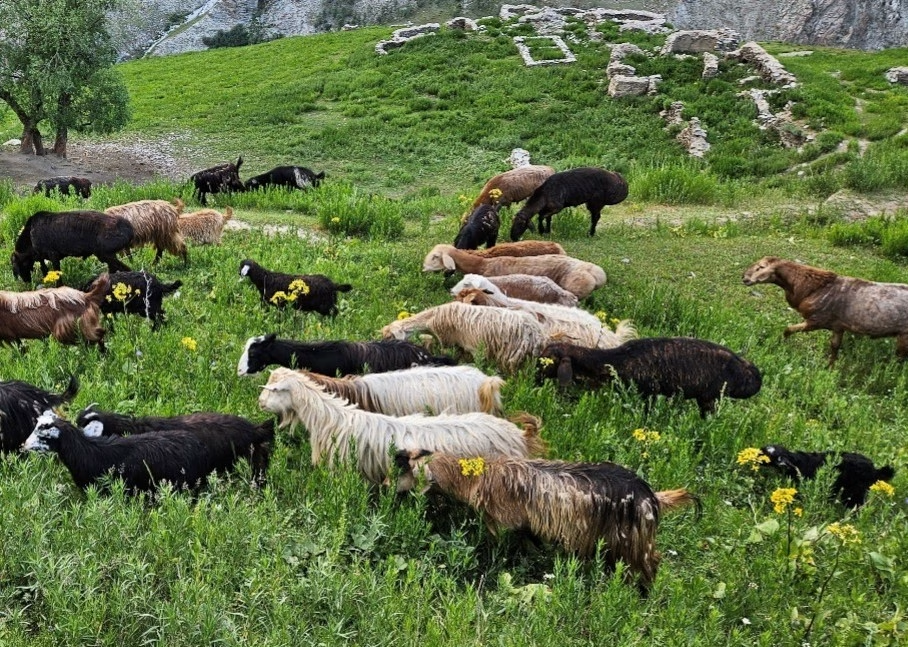
Rising temperatures, unpredictable rainfall, and more frequent droughts are affecting water availability and vegetation. Overgrazing and limited pasture management add further stress. In some areas, livestock numbers exceed the land’s capacity, leading to vegetation loss and soil degradation. As pastures dry out, fodder becomes scarce, affecting livestock health and productivity.
These changes also impact wildlife. Reduced vegetation and water availability can alter habitats and movement patterns for mammals such as ibex and snow leopards. Local observations suggest these are being seen less frequently near villages.
Looking ahead
Yaghnob Natural Park offers a strong foundation for integrated conservation by linking biodiversity protection with community wellbeing. Organizations such as CAMP Tabiat work to support local villages in adopting sustainable resource use practices, particularly in response to climate change.
Future efforts focus on strengthening co-management approaches, where local knowledge is combined with scientific research to guide decision-making. Key priorities include improving pasture management, expanding wildlife monitoring and supporting community-based conservation initiatives. Projects like“Strengthening Co-Management in Yagnob National Park, Tajikistan” are helping to build local capacity in wildlife monitoring, sustainable tourism, and collaborative park management. Activities have included the use of camera traps to document species such as snow leopards, lynx, ibex, and bears, while training park rangers and community members to carry out long-term monitoring.
CAMP tabiat (n.d.). About us. Available at: About us – ОБЩЕСТВЕННЫЙ ФОНД УСТОЙЧИВОГО РАЗВИТИЯ ГОРНЫХ РЕГИОНОВ (Accessed 29 April 2026).
Central Asian Mammals and Climate Adaptation (CAMCA). (2025). Yaghnob Valley: Pasture Assessments in Tajikistan. Available at: https://camcaproject.org/yaghnob-valley-pasture-assessments-in-tajikistan/ (Accessed: 29 April 2026).
Plateau Perspectives (2023). Yagnob Project. Avialable at: https://stories.plateauperspectives.org/yagnobproject (Accessed 27 April 2026).
WWF Climate Crowd. (n.d.). WWF Climate Crowd. Available at: https://wwfclimatecrowd.org/ (Accessed 27 April 2026).
Yaghnob Natural Park. (2019). Establishment of the Park. Available at: https://yagnob.org/establishment-of-the-park/ (Accessed 27 April 2026).
Yupeng, L., Chen, Y., Want, F. et al. (2026). Risks of snow drought and impacts on streamflow in Central Asia’s high mountains. Regional Sustainability, 7(1). https://doi.org/10.1016/j.regsus.2026.100298