

Protecting Central Asia’s Tugai Forests
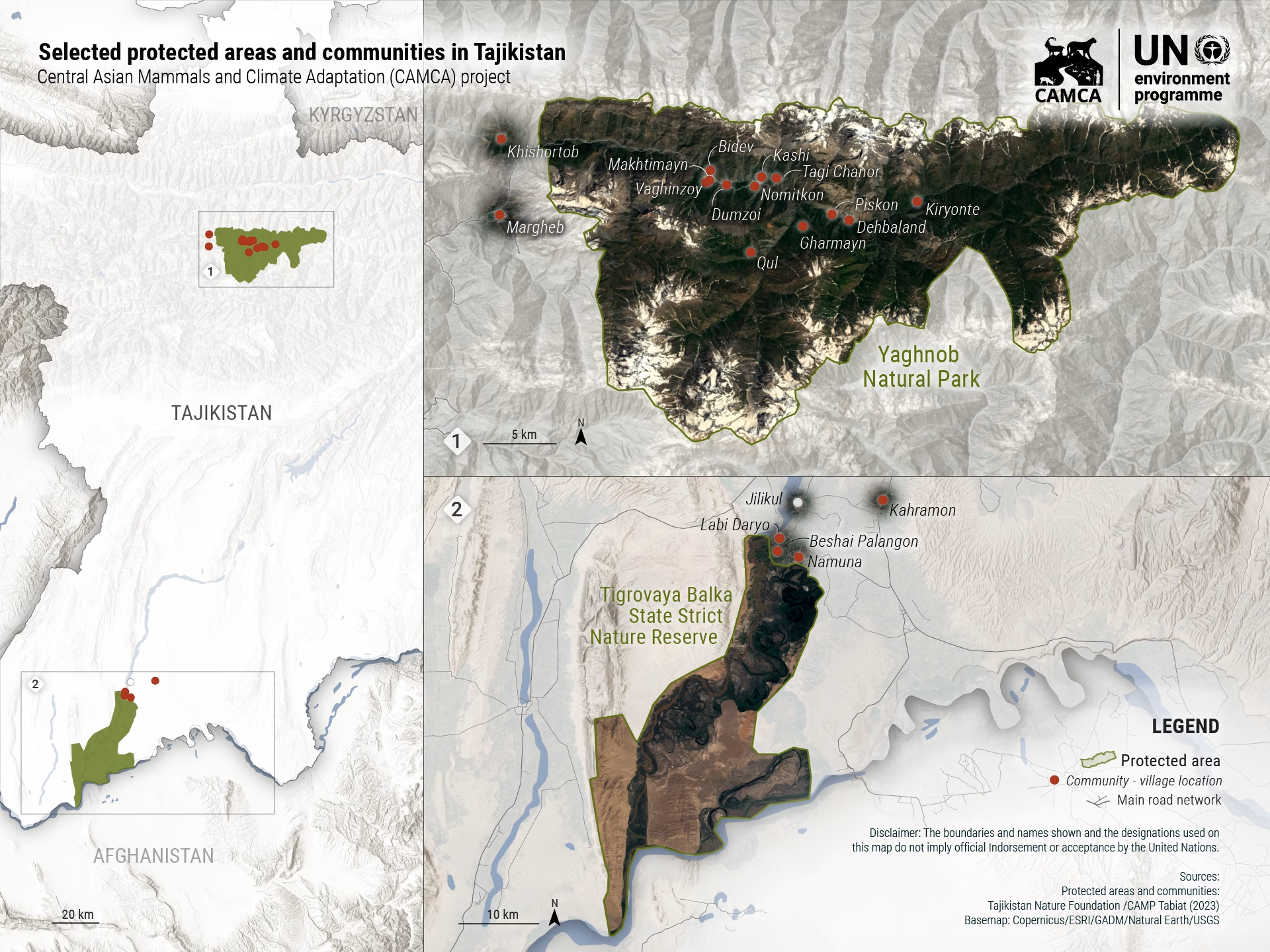
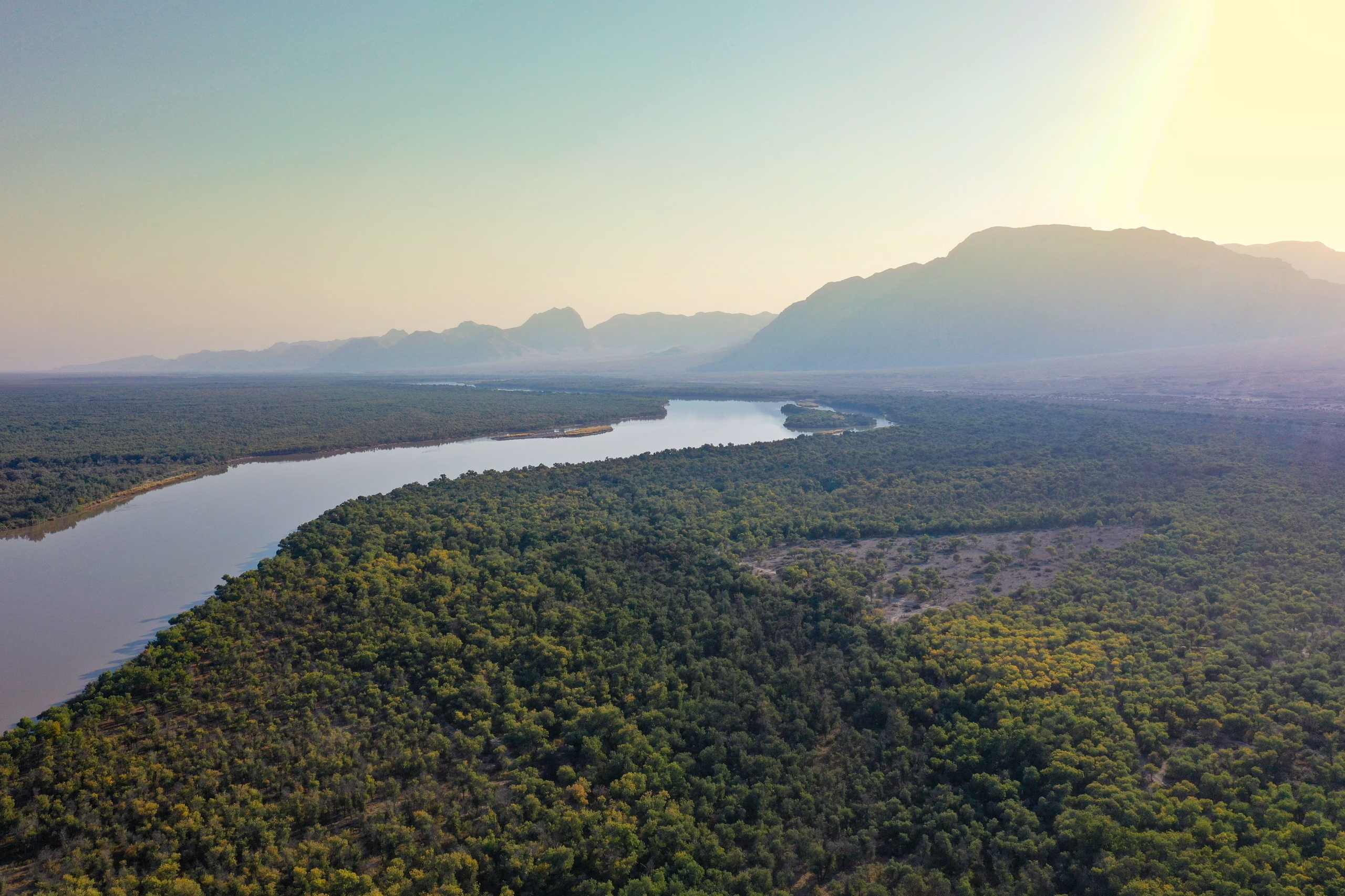
Tucked between the Vakhsh River and the Panj River in southwestern Tajikistan, the Beshai Palangon (also known as Tigrovaya Balka) State Strict Nature Reserve covers nearly 50,000 hectares of riparian tugai forests, semi-desert areas, wetlands, and low mountain ranges. Established in 1938, it protects one of the most extensive intact tugai ecosystems in Central Asia.
This ecosystem depends on a stable water supply from the Vakhsh River, which originates in the Pamir Mountains and sustains the surrounding semi-arid landscape. Conservation efforts focus on maintaining this hydrological balance and protecting natural processes within the reserve.
Biodiversity and conservation
The reserve supports plant species adapted to heat, salinity, and fluctuating water conditions, including Asiatic poplar (Populus pruinosa) and oleaster (Elaeagnus angustifolia). Wildlife includes large mammals such as Bukhara deer (Cervus hanglu bactrianus), goitered gazelle (Gazella subgutturosa) and wild boar (Sus scrofa), as well as numerous migratory bird species.

Climate impacts and threats
Climate change is increasing pressure on the Tigrovaya Balka State Strict Nature Reserve. Interviews from nearby residents through Climate Crowd reported declining wildlife, increased plant mortality from extreme heat, longer droughts, shifting seasons, and reduced rainfall.
The tugai ecosystem depends on regular flooding from the Vakhsh River but reduced rainfall, rising temperatures and increased water demands are limiting water availability. These impacts are further intensified by upstream dams and irrigation, which disrupt natural flooding cycles. As a result, groundwater declines, soils become more saline, and habitat quality decreases. Key species such as the Bukhara deer and goitered gazelle are affected as forests shrink and fragment, reducing food, shelter, and movement corridors.
Looking ahead
According to the International Union for Conservation of Nature (IUCN) the conservation outlook of the tugai forest within the Tigrovaya Balka State Strict Nature Reserve is of significant concern. Although World Heritage status has increased visibility and funding for the reserve, key challenges remain. These include limited management capacity, insufficient funding, and a lack of coordinated science-based planning.
Reserve managers are taking steps to reduce the impacts of altered water flow by actively managing water channels to ensure water from the Vakhsh river reaches the lakes and wetlands across the reserve. With continued support, stronger coordination, and sustained water flows, there is potential to help stabilize key habitats.
CAMCA (2025). Addressing the impacts of climate change on mountain wildlife and communities – Tajikistan. Policy brief. Available at: https://camcaproject.org/product/policy-brief-tajikistan/
UNESCO World Heritage Centre (n.d.). Tugay forests of the Tigrovaya Balka Nature Reserve. Available at: https://whc.unesco.org/en/list/1685/ (Accessed: 26 April 2026).
World Heritage Outlook (IUCN) (2024). Tugay forests of the Tigrovaya Balka Nature Reserve. Available at: https://worldheritageoutlook.iucn.org/explore-sites/tugay-forests-tigrovaya-balka-nature-reserve
(Accessed: 26 April 2026).