In the CAMCA project, local partners used ClimateCrowd Surveys to map how communities are experiencing and responding to climate change, and together, UNEP applied WWF-developed Species Vulnerability Assessments (SVA), adapted to regional context, to rank how each of the 6 CAMCA focal species is vulnerable to climate change. However, this left an important gap – how vulnerable are Protected Areas (PAs) to climate change and how can we improve resilience?
To address this, CAMCA partner WWF built on its previous experience developing Climate Crowd and Species Vulnerability Assessments to create a brand-new tool. Called the Protected Area Vulnerability Assessment or PAVA, this tool was designed as a series of easy-to-answer questions that would highlight areas requiring intervention in a similar format to the species vulnerability assessment. This included how sensitive and exposed the protected area is to climate change, mapping its potential capacity to adapt, and ranking other threats (in addition to climate change) it might be facing.
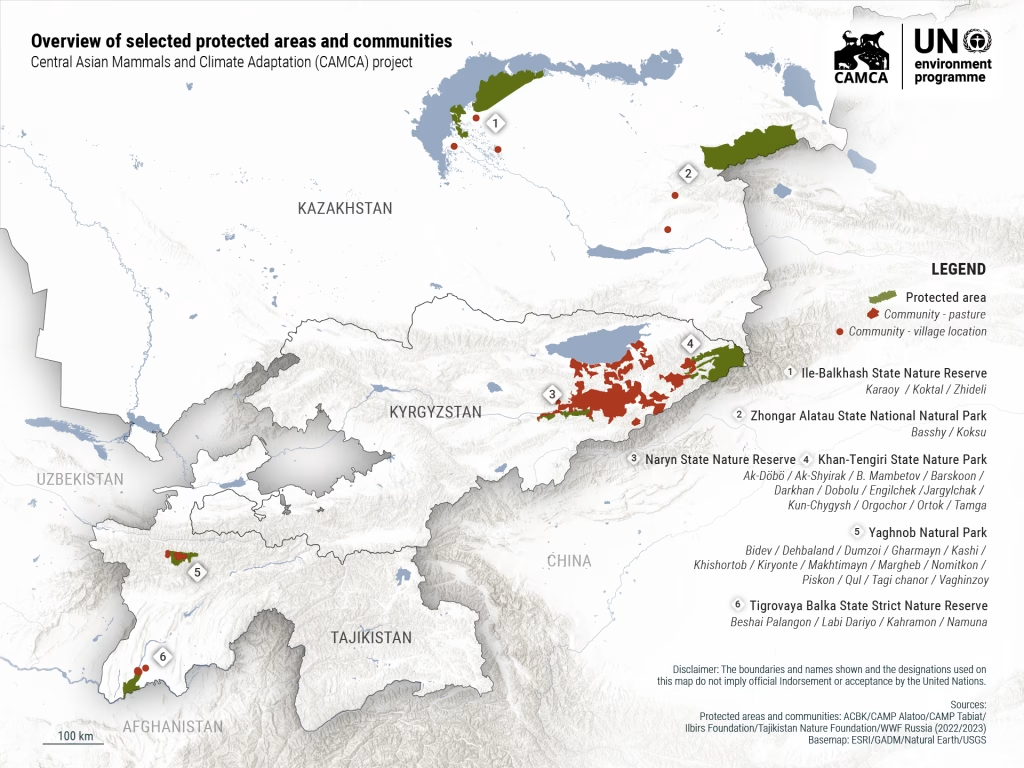
Before debuting the PAVA tool as a key project deliverable, partners in Kyrgyzstan (CAMP Alatoo) and Tajikistan (Tajikistan Nature Foundation) tested the tool in Khan Tengiri State Nature Park and Beshai Palangon State Nature Reserve, respectively. This provided an invaluable opportunity to gather initial feedback, test different formats, and identify any pain points experienced by end-users.
During the 2025 test phase, higher scores generally indicated greater vulnerability to climate change, while lower scores indicated a lower impact of this threat and/or higher resilience. While the total score indicated the overall vulnerability of the protected area, it was also important to look at the individual scores for each question. Based on the score, three categories, or levels of urgency, were assigned:
| Critical | The impact of this variable on the PA is expected to be significant. Any conservation measures in the PA management plan need to be evaluated whether and how they are impacted by this variable. Additional measures to track and address this variable need to be included in the PA management plan. |
| Recommend | The impact of this variable on the PA is expected to be present. It is recommended to evaluate whether and how any conservation measures in the PA management plan are impacted by this variable. It is also recommended to add some measures to the PA management plan to track and address this variable. |
| Consider | The variable’s influence on the protected area is expected to be limited. Evaluate the need for including this variable in the PA management plan and its conservation measures. |
Beshai Palangon State Nature Reserve – Tajikistan
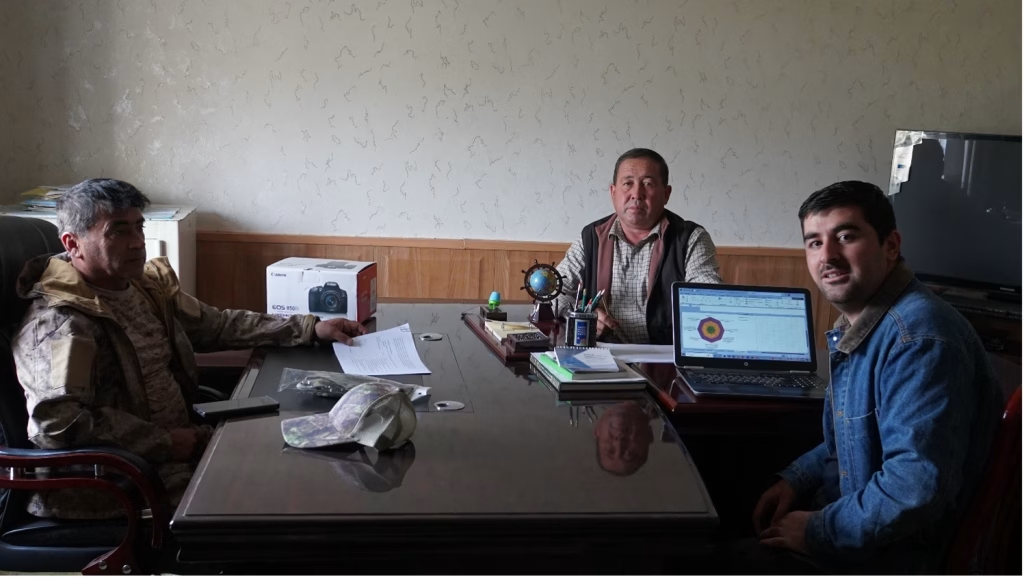
In October 2025, Tajikistan Nature Foundation sat down with management representatives of Behsai Palangon and applied the PAVA tool. Overall, it proved to be a practical way to collect basic information about the impact of climate change in the reserve, as captured by the experience of the reserve staff, even when data from systematic monitoring are lacking. The assessment process was simple but sparked lots of discussion, particularly in the “Sensitivity” category.
Since the size of the reserve is modest, climate change could affect a substantial portion of its ecosystems. The soils and subsoils were ranked as highly susceptible to degradation due to erosion, droughts, and gradual depletion. Changes in the availability of food and water resulted in noticeable seasonal fluctuations under long-term drought conditions (also highlighted under the Exposure section). There have been reported cases of species range shifts, although these changes were also attributed to anthropogenic processes outside the protected area. In discussions around the topic of “Are there changes in the availability of food/water for species due to climatic events (droughts, heat, heavy snow, etc.)?”, staff noted that due to seasonal droughts and the drying of grasses within the reserve, Bukhara deer and the Tajik subspecies of pheasant often move into adjacent agricultural land in search of fresh forage, leading to conflicts with local farmers.
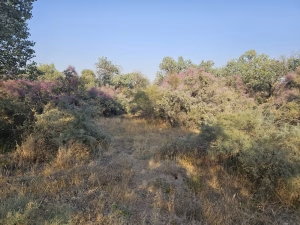
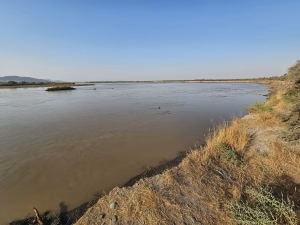
One of the strongest indicators of climate sensitivity was the presence of phenological changes, or the timing of species’ life history events. Staff members report shifts in flowering periods, animal activity, and seasonal movements. For example, reserve staff said that waterfowl are arriving at the reserve’s water bodies much later than in previous years. According to the staff, this was caused by a later drop in temperature and the onset of cold seasons. They also noted that deer have begun shedding their antlers earlier.
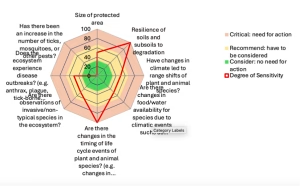
In the pilot phase, PAVA results were visualized using a “target” which captured which variables (or questions) were listed for each urgency level (critical, recommend, or consider). The results for the Sensitivity category in Beshai Palangon are shown above (but may not reflect how PAVA tool results will be visualized moving forward).
TNF noted some difficulty in answering the question “Size of the protected area”. The answers ranged from “fairly large” to “medium” to “extremely small”. For a protected area of around 50,000 hectares, what is considered “small” for Tajikistan might not be the same in another country.
Khan Tengiri State Nature Park – Kyrgyzstan
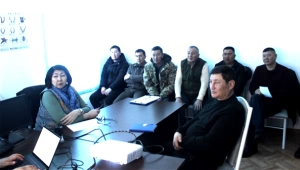
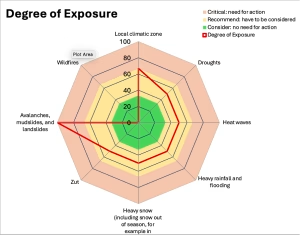
In February 2025, project partners CAMP Alatoo held a workshop together with 10 staff members from Khan Tengiri State Nature Park. In the “Exposure” category, one category identified as requiring urgent action was the increased risk from avalanches, mudslides, and landslides. Park staff noted that the frequency of these events has increased over the last three years, and as a result, 60% of the roads are blocked, and traffic can be stopped for up to a week. Residents are forced to clear roads on their own, putting their lives in danger. Every year, people die in these areas, on average, 1-2 people per year, as herders move their livestock to remote areas of summer pastures along these areas.
The Park is also prone to drought, extreme heat, heavy rainfall, flooding, and changes in snowfall patterns. However, these phenomena occur only periodically, and their impact was considered moderate. No wildfires have yet occurred within the park, but it was noted that there is a general lack of awareness among protected area staff about the impacts of climate impacts such as drought, floods, and fires. This comes in addition to a lack of knowledge about actions to take to minimize risk, damage, and loss of life – important gaps when considering how to better address these issues in protected area management plans. As before, the “target” results for the Exposure category in Khan Tengiri are shown below, but may not reflect how PAVA tool results will be visualized moving forward.
In a larger group setting, CAMP Alatoo made several recommendations to help PAVA to fit into a structured, facilitated workshop format. These included setting a clear goal at the outset (reviewing and improving the PA management plan), an introductory session to explain fundamental concepts, and developing concrete case studies for participants to see how results were turned into action in other protected areas.
Based on feedback from both areas, as well as another pilot test in Tajikistan conducted by CAMP Tabiat, the PAVA tool is undergoing further testing in protected areas of Nepal and Bhutan. As CAMCA wraps up in 2026, WWF, UNEP, and GRID-Arendal will be exploring options to make the tool available online and provide additional resources for protected areas and staff wanting to use this tool post-project. We see a bright future for PAVA, and hope this is just the first step towards widespread implementation!