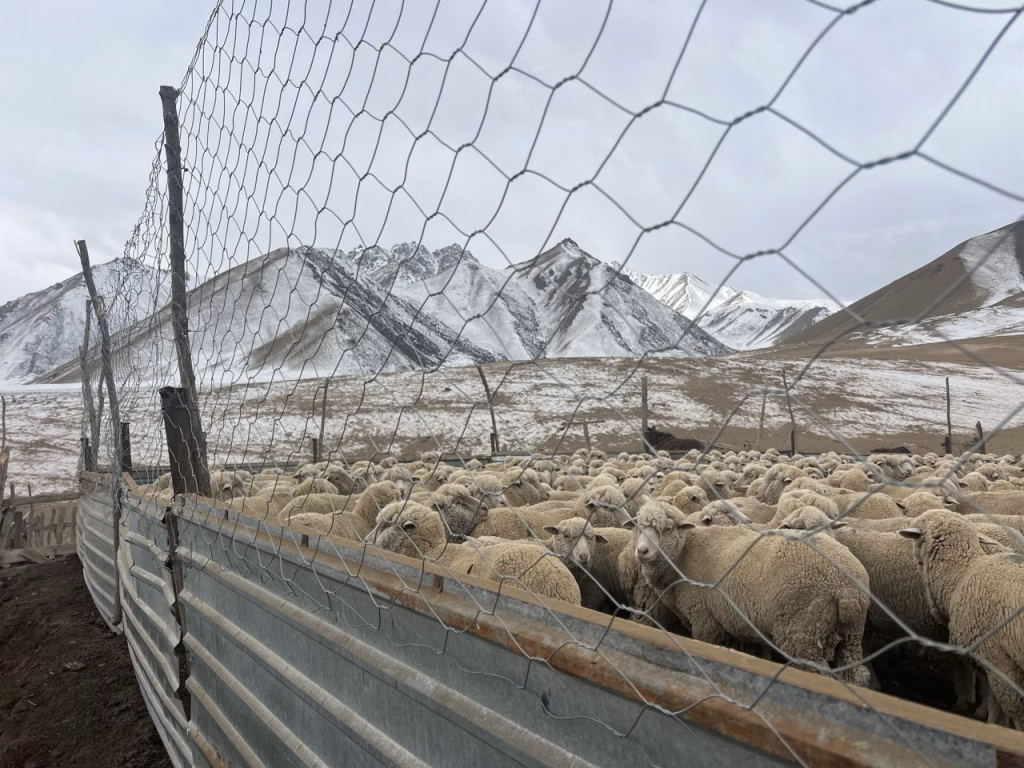
The Convention on Migratory Species (CMS) provides a global platform for the conservation and sustainable use of migratory animals and their habitats, including for three of the CAMCA focal species – Bukhara deer, Argali sheep, and snow leopard.
Many animals move across different landscapes (and seascapes) through the seasons following food, for breeding, or to escape unfavourable environmental conditions. These movements often cross geopolitical borders, which means that cooperation between countries and regions is required and that the ecosystems that they rely on in each area are healthy and intact.
Protected areas are an important tool for protecting critical habitat for migratory species, but protecting small patches is not enough; we also need connected landscapes. Connecting protected areas through ecological corridors enables migratory species to move freely between critical habitats and allows both humans and infrastructure to be managed to help reduce negative impacts on both wildlife and local livelihoods. Eco-corridors help align different sectors and stakeholders around a common goal.
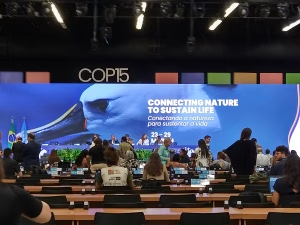
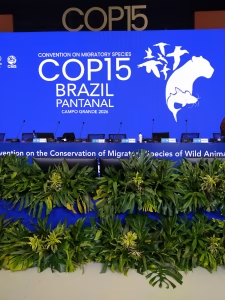
Plenary Hall
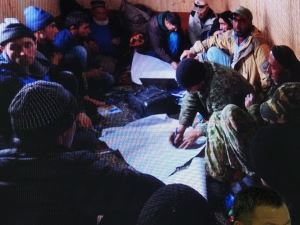
Decisionmaking
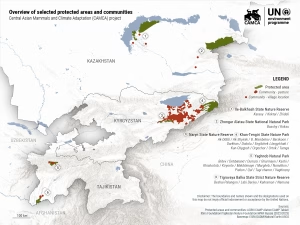
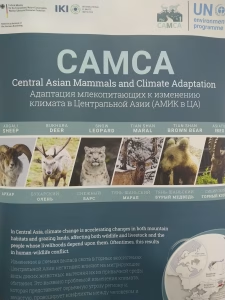
CAMCA Project overview
GRID-Arendal, UNEP, CMS, and the Government of the Kyrgyz Republic hosted two side events at the 15th Meeting of the Conference of the Parties to the CMS in Campo Grande, Brazil to explore the “where”— the corridors and maps that allow species to move and the “how” of connectivity — the sustainable management of rangelands that makes those corridors viable. The side events brought together experts from Central Asia, South America, Africa, and Europe to share experiences and discuss good practices protecting migratory species and sustaining local livelihoods
Julian Blanc, Director of UNEP’s Biodiversity and Land Branch, opened both events by stressing that corridors are “more than just transit routes; they are working landscapes,” and that connectivity depends as much on how land between protected areas is managed as on the areas themselves. He also highlighted the importance of strong community involvement and links to livelihoods, including pastoralism, noting that sustainable land management can create win–win outcomes for both people and migratory species.
“When we connect nature, we create benefits for all.” Julian Blanc.
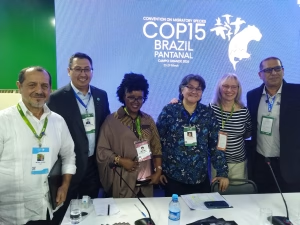
All speakers from Event #1
CMS Banner
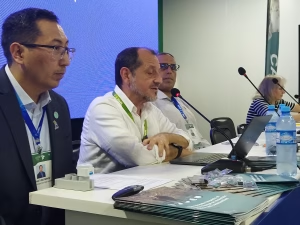
Julian from UNEP
Azamat Usupbekov from CAMP Alatoo presented an example from the Kyrgyz Republic, where an 800 000 ha eco-corridor connecting Khan Tengiri and Naryn State Nature Parks was declared in May 2025. This builds on a legal framework for eco-corridors approved in 2024, which enables the connection of important habitats, coordination of land use across sectors, and the maintenance of ecological connectivity.
Reflecting on the rapid implementation, he noted that “science alone is not enough; it is most important working with the local communities,” Azamat Usupbekov.
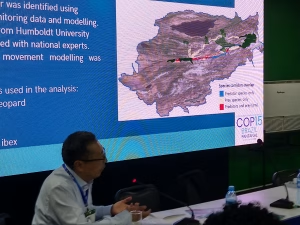
Azamat presenting on eco-corridors
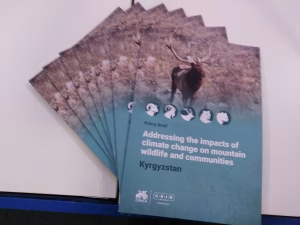
Policy briefs for Kyrgyzstan
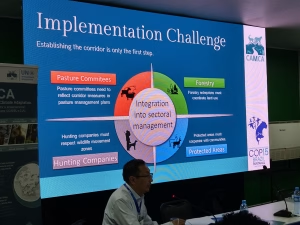
Azamat presenting on the implementation challenges
Matthias Jurek from UNEP-Vienna followed with a presentation highlighting the importance of cross-sectoral coordination in the establishment and management of eco-corridors. In the Balkans and Carpathian Mountains, it is vital to ensure that eco-corridors are included during pre-feasibility assessments when new roads or power infrastructure development are being considered.
“A successful eco-corridor moves from being a line on a map to a managed corridor as a living landscape.” Matthias Jurek.
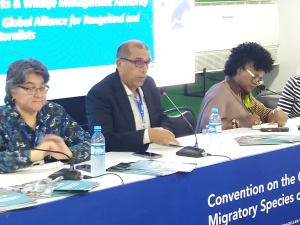
The side event concluded with a panel discussion with Ruth Tiffer Sotomayor from the World Bank, Patience Gandiwa from Zimbabwe Parks, and Enrique Michaud, Co-Chair of the Global Alliance for Rangelands and Pastoralists, on the challenges of implementing eco-corridors. Key messages were the need for regulatory frameworks, cross-border cooperation, clear geographic delineation, and, most importantly, meaningful stakeholder engagement throughout the process. Working with all stakeholders and rightsholders in the co-creation of eco-corridors helps build stewardship for the future management of the eco-corridor.
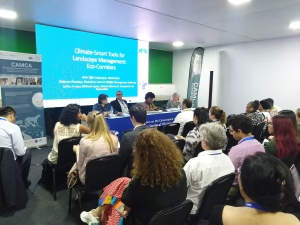
Panelists at Event #1
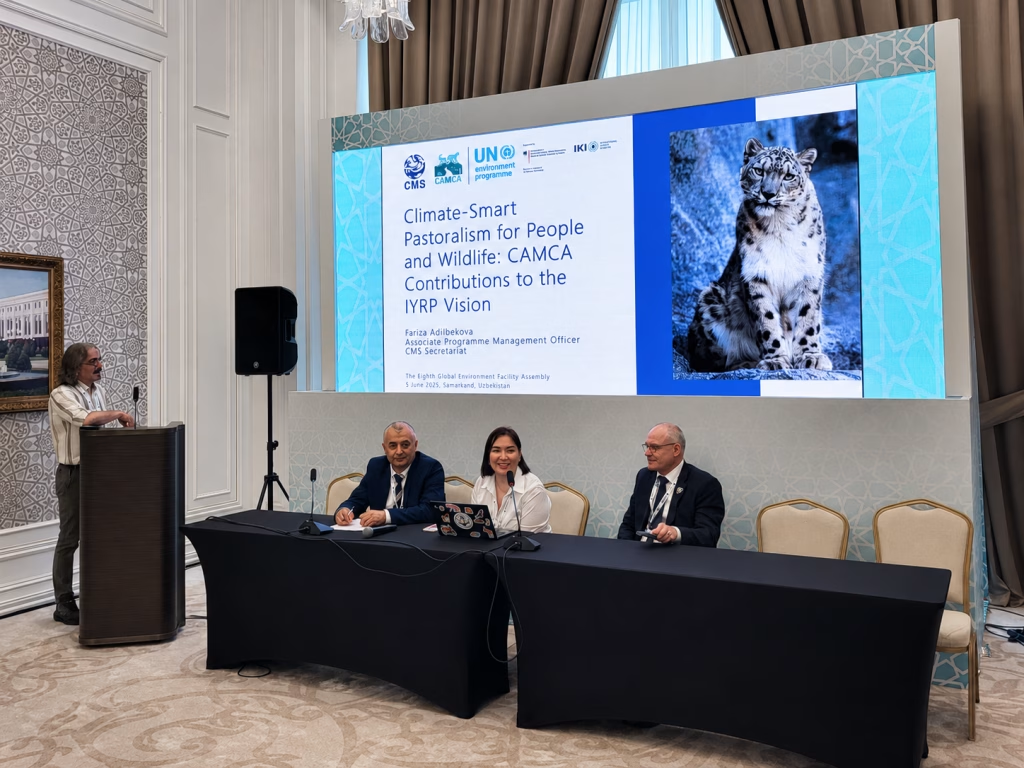
The next side event opened with Buuveibataar Bayarbaatar, Senior Scientist with the Wildlife Conservation Society Mongolia, who gave an update on the International Year of Rangelands and Pastoralists (IYRP) taking place in 2026. Rangelands occur around the globe and support a diversity of animals, including migratory species, which, in turn, support pastoralists. The IYRP has four goals:
- Increase public awareness of the societal value derived from rangelands and pastoralists.
- Promote pastoralist knowledge, innovation, and coalition building to meet contemporary needs.
- Advocate for evidence-based policy and legislation that supports sustainable rangeland stewardship and pastoralist livelihoods.
- Foster ethical investment to address challenges confronting rangelands and pastoralists in the 21st century.
Rangelands and pastoralism are important in Mongolia. The country was a champion for the IYRP and will host a Global Pastoralists Gathering and Conference in August this year.
“When rangelands are well managed, they support people, grazing stock, wildlife and migratory species.” Buuveibaatar Bayarbaatar.
Following Buuvei’s remarks, three case studies were presented that looked at rangeland management in mountains and tools to support sustainability, through the interrelated lenses of climate change, biodiversity conservation, and land degradation.
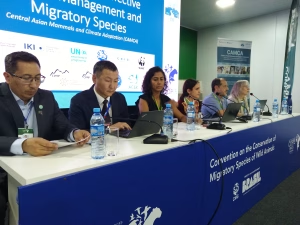
Speakers at Event #2
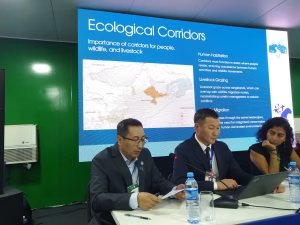
Azamat Usupbekov presented on the management of rangelands in the Kyrgyz Republic, highlighting the challenges of working with multiple stakeholders and different management authorities, ministries, and legislation. There is a need for coordinated management approaches, with strong stakeholder inclusion. It is also important to have strong monitoring to determine if management measures are working. By empowering stakeholders to contribute to the monitoring through field observations, GPS tracking, GIS mapping and herder interviews, successful initiatives can be identified, and joint stewardship can be enhanced.
“If we manage landscapes wisely, we can increase climate resilience, livelihoods and biodiversity conservation.” Azamat Usupbekov.
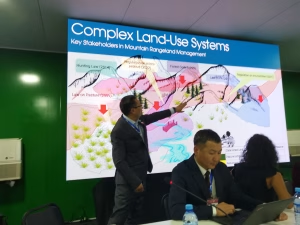
Azamat presenting on complex land systems
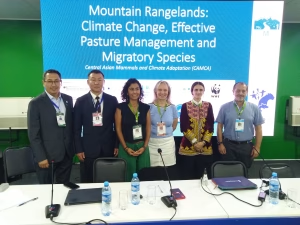
All speakers from Event #2
Lyla Amini from the Tajikistan Nature Foundation (TNF) presented on the Yaghnob National Park in Tajikistan. The park, established in 2021, shifted management from historical and traditional ownership rights built over generations since the 6th century to rental allocation of grazing rights, which created conflicts. By developing a community-led advisory board and increasing communication, they created shared responsibility, which helped rebuild trust in park management and purpose.
“Including all stakeholder needs led to increased decision-making quality.” Lyla Amini.
Finally, Aneli Gomez Lovaton from the Mountain Institute presented on the rangeland management measures in Peru. The Miraflores community, at an altitude of 3149 m, includes both pastoral and agricultural systems. It faces challenges from complex management to climate change. Using a no-regrets adaptation measure, such as community-based sustainable water and native rangeland management, they were able to see positive benefits, including enhanced water availability and increased vegetation cover.
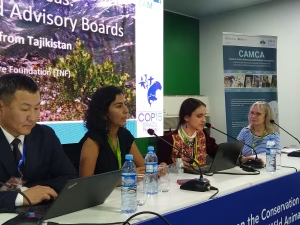
Aneli from TNF
CAMCA wishes to thank the CMS for being a valuable project partner and would like to thank the Secretariat for their support. Congratulations on a successful COP!