

Central Asia’s only preserved river delta
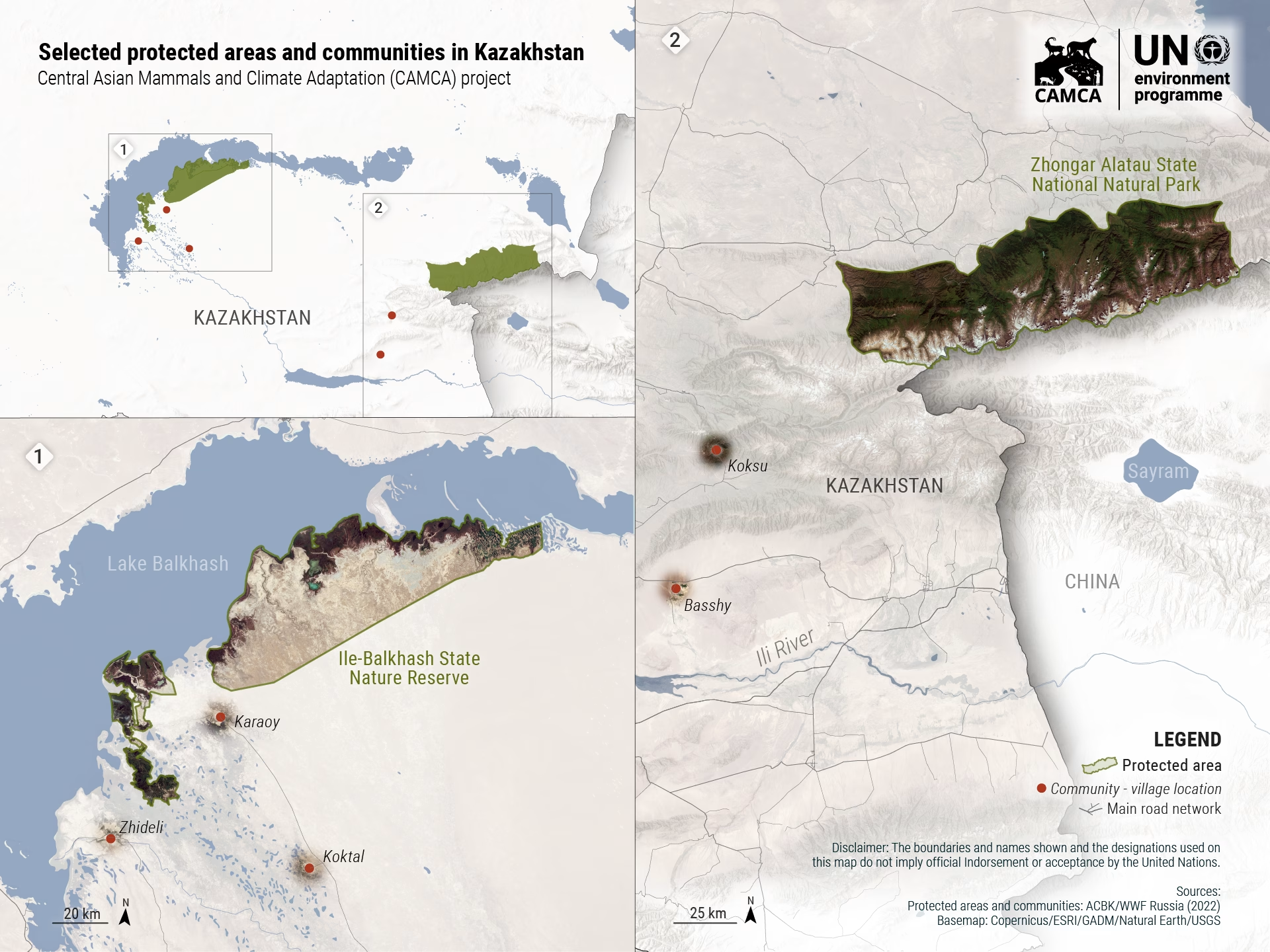
The Ile-Balkash State Nature Reserve, located in the Almaty region, is a unique ecological system and the only preserved river delta in Central Asia that has not experienced widespread degradation due to desertification. Established in June 2018 and later expanded in January 2026, the reserve now spans over 450 000 hectares of wetlands, river channels, and desert landscapes.
Situated between the vast Lake Balkhash (at about 340 metres above sea level) and the Sary-Ishik-Otrau and the Taukum Deserts, it forms a rare sanctuary for wildlife and plants in an otherwise arid landscape. Although the reserve lies in lowland terrain, it is closely connected to surrounding mountain systems via the Ile River, which originates in the Tian Shan – where elevations exceed 7000 metres, and sustain the delta’s wetlands. These wetlands and river channels serve as critical habitats and provide rich feeding and nesting grounds for birds, including species such as the Dalmatian pelican (Pelecanus crispus) and glossy ibis (Plegadis falcinellus), making it a vital stopover along major migratory routes.
Biodiversity and conservation
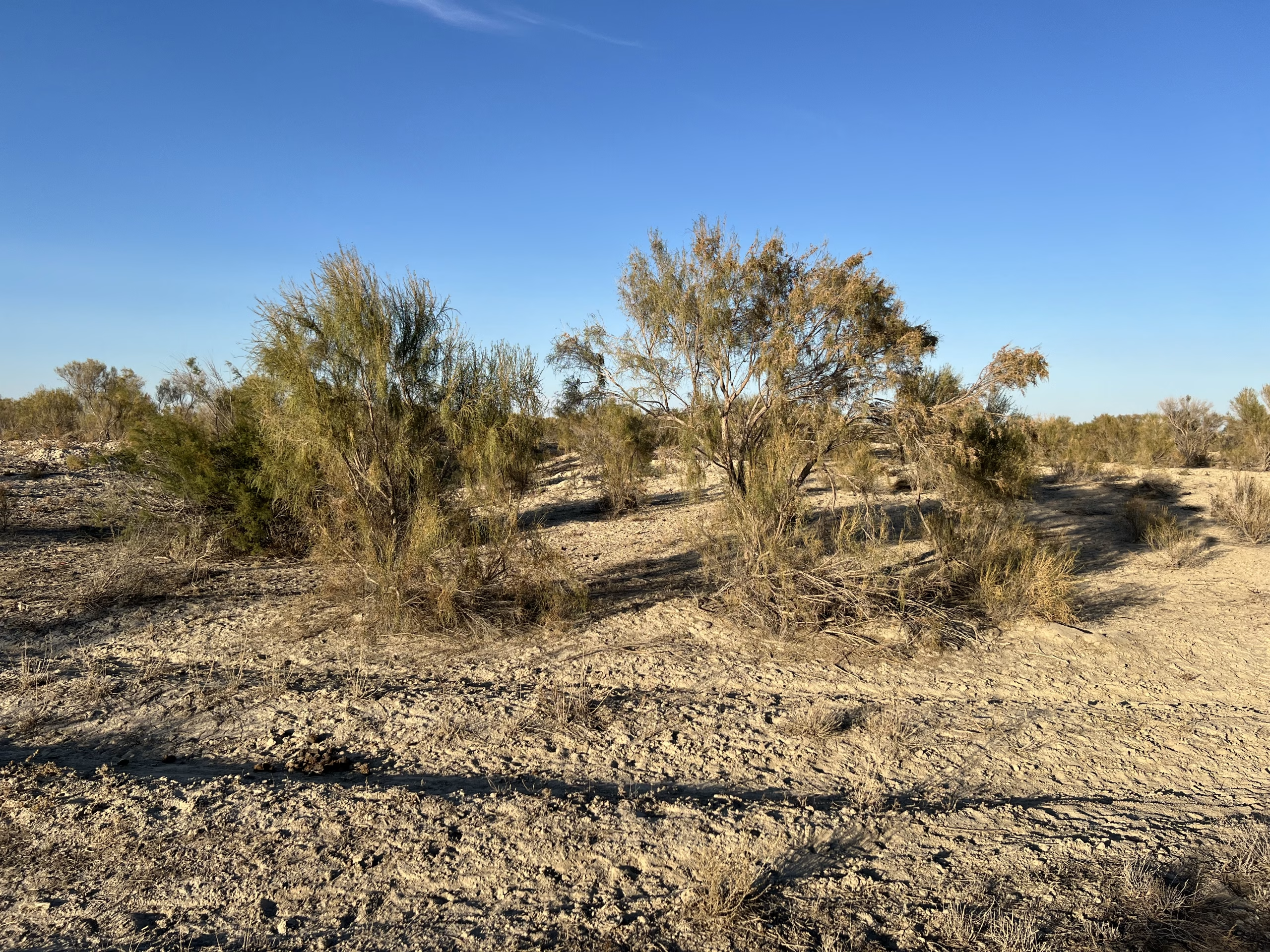
The Ile-Balkash State Nature Reserve supports a diversity of endangered species, many of which are listed in Kazakhstan’s Red Book and are under special protection. Among its notable mammals are the marbled polecat (Vormela peregusna), goitered gazelle (Gazella subgutturosa) and the Pale dwarf jerboa (Salpingotus pallidus). The reserve also sustains unique saxaul and tugai forests. These habitats are especially valuable for species such as the Bukhara deer (Cervus hanglu), which depend on tugai forest for survival.
In total, the reserve is home to 39 species of mammals, 32 species of fish, including six endemic species such as the Balkhash marinka (Schizothorax argentatus), 284 species of birds, 19 reptiles and three amphibian species.
Recent efforts have focused on preparations for tiger reintroduction in the reserve, including measures to restore habitat connectivity and strengthen populations of key prey species. These actions are intended to improve ecological conditions necessary to support the species’ re-establishment. If successful, this initiative could contribute to the return of an extirpated apex predator to the ecosystem.

Climate impacts and threats
The reserve experiences a continental, arid climate with strong seasonal contrasts. Summers are hot and dry, with average temperatures around 25 °C, while winters are cold and often snow-scarce with average temperature of -8 to -14 °C. Spring brings unstable weather and occasional frosts, while autumn sees increased cold surges. The annual precipitation is low, around 140mm, and combined with high evaporation this creates challenging conditions for vegetation, with prolonged droughts putting additional pressure on forage species important for Bukhara deer.
Across the wider Ile-Balkash region, rising temperatures, shifting snowmelt patterns from the Dzungarian Alatau, and increasing upstream water extraction are reducing river inflow into Lake Balkash. As a closed basin, even small changes can raise salinity levels, shrink vital wetlands, and degrade critical habitats for fish and bird species. Pollution, declining water quality, and the introduction of non-native species further intensify biodiversity loss and threaten the livelihoods that depend on the lake’s ecosystem.
Looking ahead
Initiatives such as the reintroduction of the tiger form part of a broader effort to restore ecological processes in the landscape, alongside measures to recover prey species like the Bukhara deer, kulan (Equus hemionus), and gazelle. Habitat restoration, including the planting of poplar and other trees and providing perennial water sources for wildlife, is strengthening ecosystems and helping to combat deforestation. Finally, environmental education and involving local communities are creating new opportunities for employment and ecotourism, demonstrating how conservation can restore ecosystems and support livelihoods.
Central Asian Mammals and Climate Adaptation (CAMCA) Project. (2026) Bukhara deer. Available at: https://camcaproject.org/modules/bukhara-deer/ (Accessed: 21 April 2026)
Ile-Balkhash State Nature Reserve. (2026). Official website. Available at: https://ile-balkhash.kz/en (Accessed: 21 April 2026).
Eikeland, P. (n.d.). Repurposing old wells for Bukhara deer in Ile-Balkhash State Nature Reservat – Kazakhstan. PANORAMA – Solutions for a healthy planet. Available at: Repurposing old wells for Bukhara deer in Ile-Balkhash State Nature Reservat - Kazakhstan | PANORAMA (Accessed 29 April 2026).
United Nations Development Programme Kazakhstan. (2022). Walking through Ile-Balkhash Nature Reserve for a shared future of people and nature. Available at: Walking through Ile-Balkhash Nature Reserve – For a shared future of people and nature by UNDP Kazakhstan - Exposure
United Nations Development Programme Kazakhstan. (2022). Walking through Ile-Balkhash Nature Reserve for a shared future of people and nature - Video. Available at: https://www.undp.org/kazakhstan/stories/walking-through-ile-balkhash-nature-reserve-video
WWF. (2026). Expansion of the Ile-Balkhash Nature Reserve: A New Stage in Nature Conservation and Tiger Reintroduction. Available at: https://www.wwfcentralasia.org/en/?20675316/ExpansionoftheIle-Balkhash (Accessed 21 April 2026).