

From steppe to mountain peaks
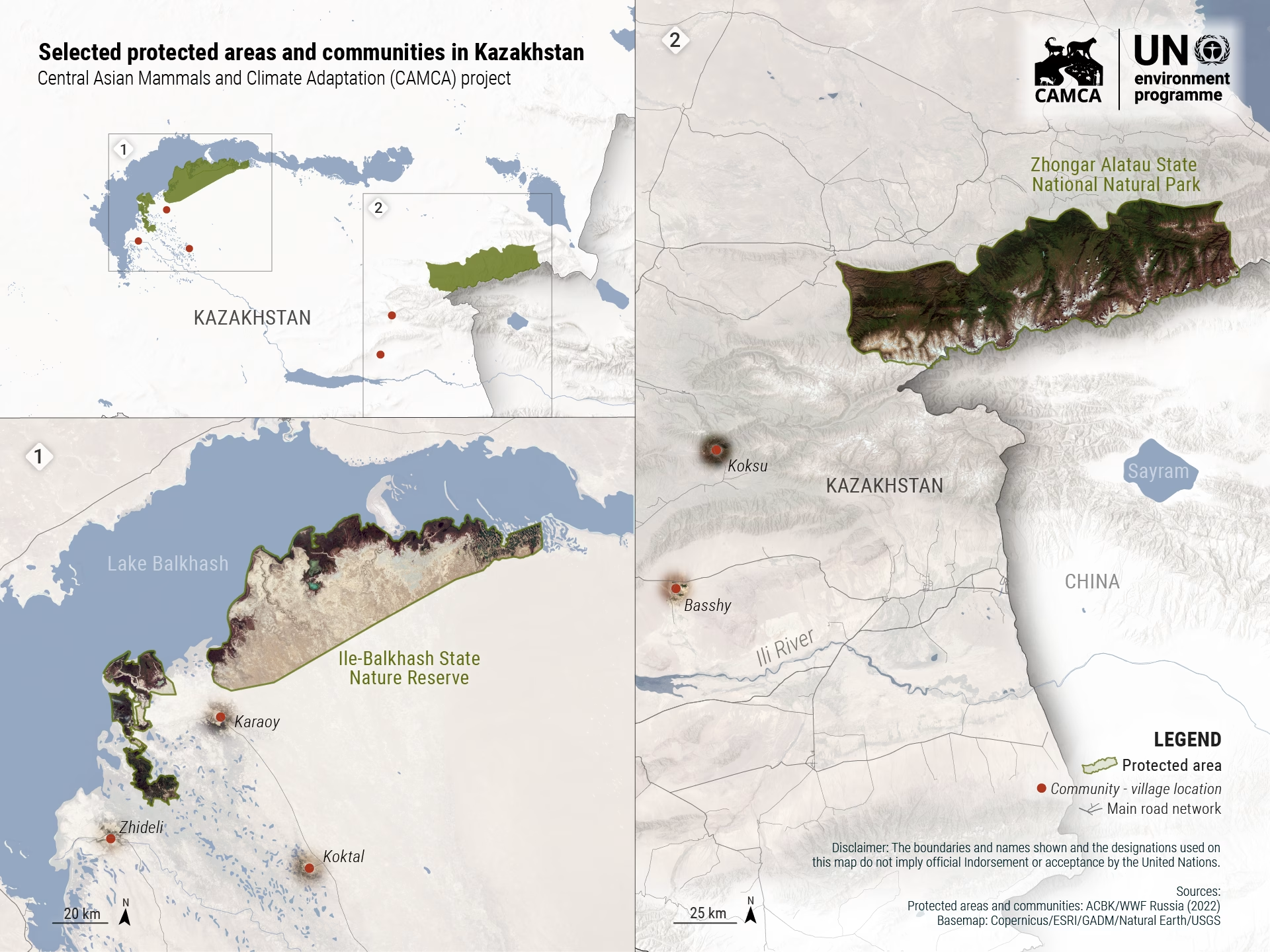
Located along the northern ridge of Zhetysu Alatau along the Kazakh-Chinese border, Zhongar Alatau State National Nature Park is a diverse landscape with rich biodiversity. The park spans 356 000 hectares within the Tian Shan mountains and rises from about 1400 to its highest peak of Semenov-Tien-Shan at 4622 metres. The altitudinal variation creates a wide range of habitat from lowland steppe, forested slopes, and subalpine meadows to nival rock zones above 3000 metres. In the upper elevations, the cryosphere plays a key hydrological role, where seasonal snow- and glacier melt sustain summer runoff that supports downstream ecosystems and agriculture.
Established in 2010, the park was created to preserve these intact ecosystems and the wide array of plants and animals within it, including one of the world’s most important wild apple gene banks. Beyond its ecological importance, the park also plays a growing role in supporting local livelihoods, where ecotourism offers visitors a chance to experience its natural beauty while contributing to conservation efforts.
Biodiversity and conservation
The Zhongar Alatau State National Nature Park is home to 49 species of mammals, including six listed in Kazakhstan’s Red Book, among them the iconic snow leopard (Panthera uncia) and the Tian Shan brown bear (Ursus arctos isabellinus). There are around 170 species of birds, including 13 protected species and more than 600 species of invertebrates, several of which are also considered rare or threatened. Flora diversity is especially remarkable, with over 1,600 plant species identified. Of these, 76 are endemic to the Zhetysu Alatau ridge.



Climate impacts and threats
Zhongar Alatau lies within a harsh continental climate where temperature and precipitation vary across altitudes. In the mountains, annual rainfall is about 300 to 500 mm, with most falling between April and October. Snow cover typically begins melting in late March, while summer temperatures can reach around 24°C in the foothills and 17°C in the mountains.
Most precipitation falls at higher elevations, feeding snow- and glacier-fed rivers that supply critical water resources to downstream basins, including Lake Balkhash, Lake Sasykkol, and Lake Alakol. However, rising temperatures and changes in precipitation are accelerating glacier retreat in the Zhetysu Alatau, at a rate higher than in many other Central Asian mountain systems. This is reducing the reliability of meltwater, affecting both ecosystems and communities.
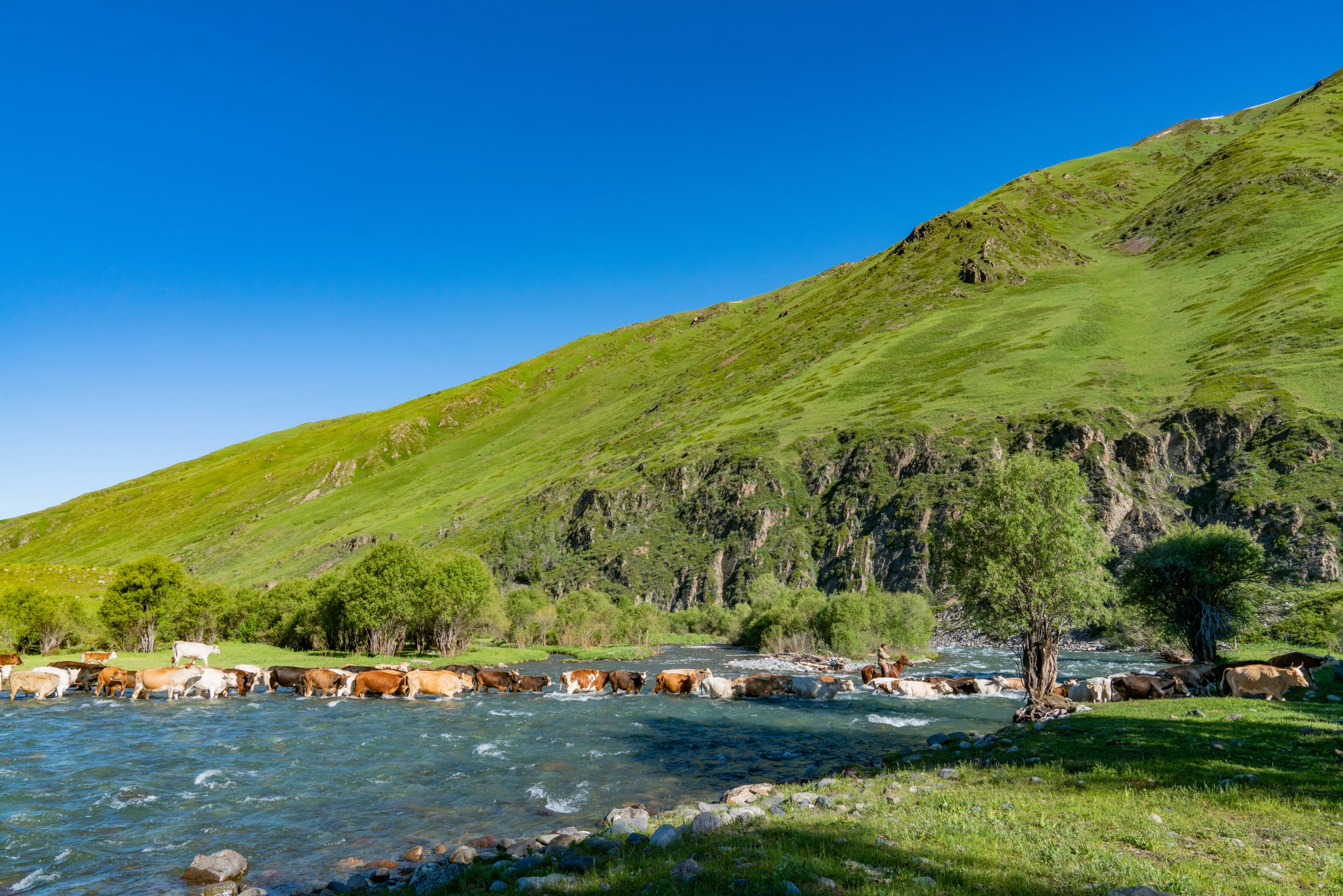
Reduced and less predictable water availability, combined with growing aridity, can affect habitat quality and the availability of forage for species such as the Tian Shan maral and other mountain ungulates. Warming conditions may also push lowland species to higher elevations, intensifying competition for limited resources and increasing contact with livestock. At the same time, habitat fragmentation and human pressures, including overgrazing and potential increases in poaching linked to changing livelihoods, further threaten the resilience of wildlife populations.
Looking ahead
Monitoring has played a key role in strengthening the conservation of species such as argali and snow leopard in Kazakhstan. The installation of nearly 300 camera traps in protected areas, including the Zhongar Alatau, has enabled scientists to collect valuable data on the species movement, helping guide targeted conservation efforts and support the long-term survival of snow leopards and other wildlife.
Kazakhstan National MAB Committee (n.d.) Zhongar biosphere reserve – Description. Available at: https://www.kazmab.kz/index.php/en/biosphere-reserves/2016-01-25-13-17-07/zhongar/description
Nurakynov, S., Kaldybayev, A., Zulpykharov, K. et al. (2023). Accelerated Glacier Area Loss in the Zhetysu (Dzhungar) Alatau Range (Tien Shan) for the Period of 1956–2016. Remote Sensing, 15(8), 2133. https://doi.org/10.3390/rs15082133
United Nations Development Programme (UNDP) Kazakhstan (2024). The Achievements of Kazakhstan in the Conservation of the Snow Leopard. Available at: https://www.undp.org/kazakhstan/stories/achievements-kazakhstan-conservation-snow-leopard
UNESCO (n.d.) Zhongar biosphere reserve. Available at: https://www.unesco.org/en/mab/zhongar
Qazaq Geography (n.d.) Zhongar-Alatau National Park. Available at: https://qazaqgeography.kz/en/zhongar-alatau-national-park-17105625