

Home of the Tian Shan maral
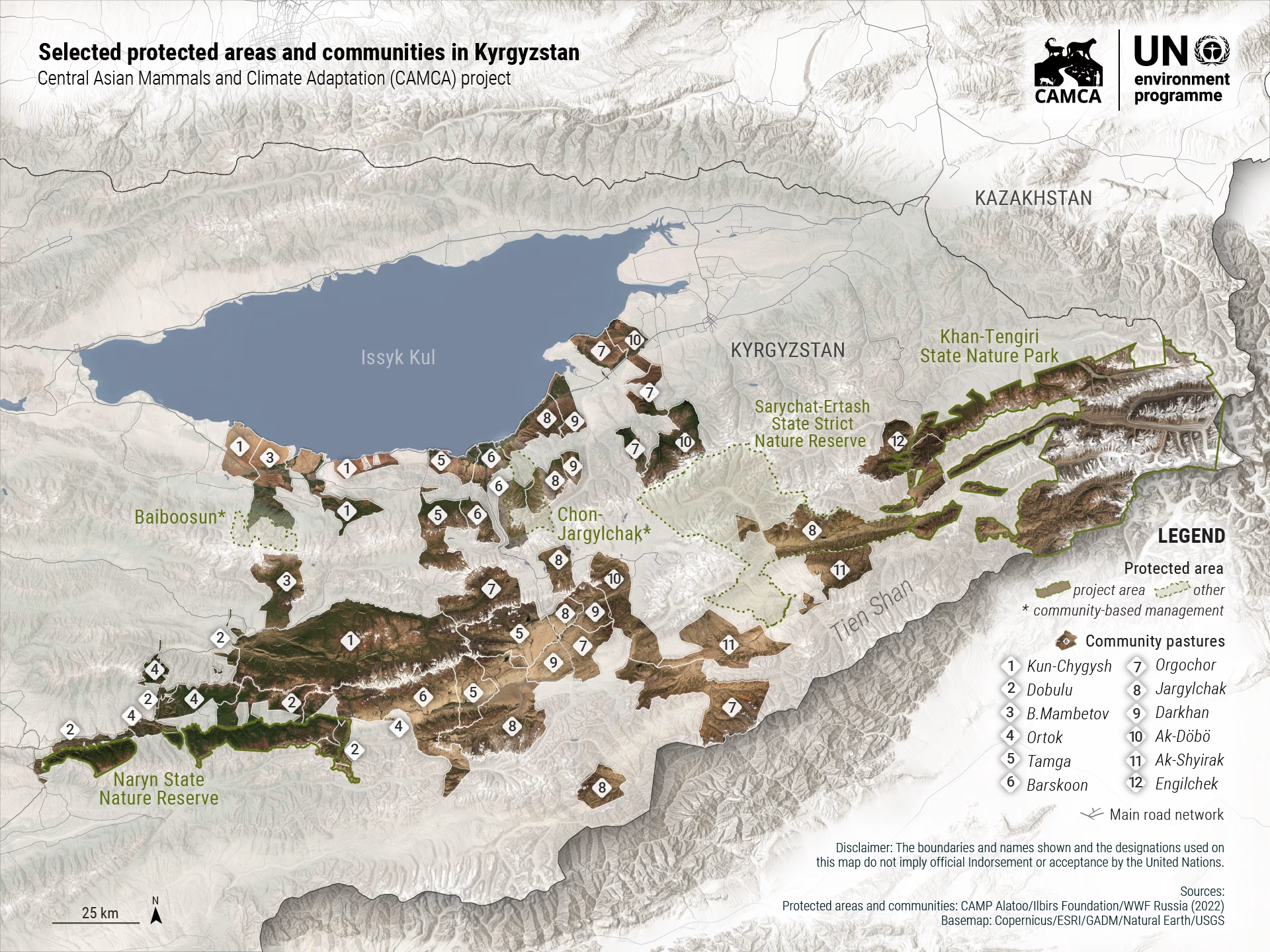
Nestled in the heart of the Central Tien Shan mountains, Naryn State Nature Reserve is a vast protected landscape established in 1983 to conserve the region’s unique alpine ecosystems. Located east of the town of Naryn along the northern slopes of the Naryn Kyrka-Too Range, the reserve covers more than 36,000 hectares of forests, rivers, and high mountain terrain. Its ecosystems are shaped by dense stands of Schrenk spruce (Picea schrenkiana) and provide essential habitat for a wide range of mountain wildlife, including the Tian Shan maral (Cervus canadensis songaricus).
Biodiversity and conservation
The Naryn State Nature Reserve supports more than 500 plant species and over 100 bird species, alongside iconic mammals such as the snow leopard (Panthera uncia), Eurasian lynx (Lynx lynx), and Tian Shan brown bear (Ursus arctos isabellinus). Among the species listed in the Red Book of the Kyrgyz Republic, five mammal species are found within the reserve, including the Tian Shan maral (Cervus canadensis songaricus).
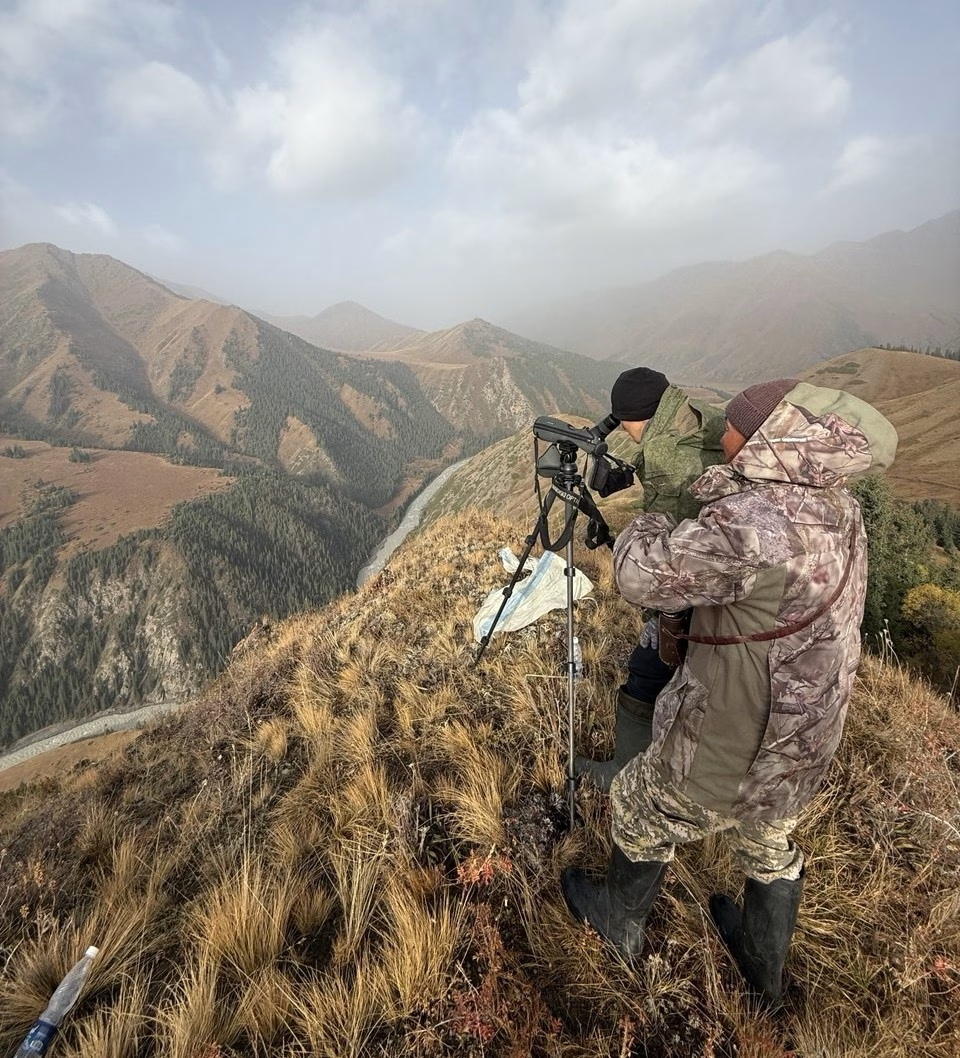
Once widespread across the region’s spruce forests, the Tian Shan maral now survives in two isolated populations in the Naryn and Issyk-Kul regions. A 2025 survey conducted under the CAMCA initiative by the Ilbirs Foundation estimated between 400 and 600 individuals in the Naryn River valley, using a combination of visual observations, monitoring of roaring males, and analysis of tracks and droppings. These findings suggest that ongoing conservation efforts are helping to stabilize the population.
The reserve is also an important stronghold for the snow leopard, one of Central Asia’s most iconic predators, with an estimated 62 individuals in the wider Naryn region. The presence of this apex species reflects the ecological integrity of the landscape and underscores the importance of continued protection and long-term monitoring.


Climate impacts and threats
Climate change is driving an upward shift in treelines and the degradation of alpine habitats, potentially reducing connectivity and limiting genetic exchange for wide-ranging species such as the snow leopard. These changes may also alter prey distribution, increase competition with livestock at higher elevations, and bring predators into closer contact with human activities.
Broader challenges across Kyrgyzstan include poaching, expansion of livestock grazing, infrastructure development, mining and deforestation. These cause increased disturbance and displacement of wild ungulates, disease transmission, human-wildlife conflict, overgrazing, vegetation degradation, habitat fragmentation and biodiversity loss. Extreme weather events have caused significant declines in prey populations in some regions, which can have cascading effects on predator survival. In addition, shifting environmental conditions may increase the spread of diseases, particularly in areas where wildlife and livestock overlap.
Looking ahead
Monitoring initiatives like the 2025 survey are essential for accurately assessing population trends and evaluating the effectiveness of conservation strategies. While the Tian Shan maral population appears stable, continued and expanded efforts are needed to support its recovery. These include continued protection, active habitat management, and strengthened anti-poaching measures.
Recent conservation efforts in Kyrgyzstan have increasingly focused on expanding protected areas and improving ecological connectivity between them. In April 2025, CAMCA supported the establishment of Ak-Ilbirs Ecological Corridor, linking Khan-Tengri State Nature Park, Sarychat-Eertash State Nature Reserve, and Naryn State Nature Reserve. Together with the establishment of the Chatkal Ecological Corridor in 2024, these initiatives contribute to a growing, interconnected network of protected landscapes of about one million hectares. The corridors create lifelines for wildlife to move more freely between protected areas, maintaining genetic diversity, and strengthening the long-term resilience of snow leopards and other wide-ranging mountain species.
CAMCA Project. (2025, May 22). Creation of an ecological corridor in Kyrgyzstan. Available at: https://camcaproject.org/creation-of-an-ecological-corridor-in-kyrgyzstan/ (Accessed: 24 April 2026).
CAMCA Project (2025). Study of Tien Shan maral in Kyrgyzstan. Available at: https://camcaproject.org/study-in-tien-shan-maral-in-kyrgyzstan/ (Accessed: 24 April 2026).
Kubanychbekov, Z., Sharma, K., Zhumabai uulu, K. et al. (2026). Snow Leopard (Panthera uncia) Status in Kyrgyzstan. Snow Leopard Reports, 5(1). https://doi.org/10.56510/slr.v5.63883
Open.kg. (2014). Naryn State Nature Reserve. Available at: https://open.kg/en/about-kyrgyzstan/nature/national-parks-and-reserves/54-narynskiy-gosudarstvennyy-zapovednik.html (Accessed: 24 April 2026).
United Nations Environment Programme (UNEP) (2025). Kyrgyz Republic unveils 800,000-hectare ecological corridor for biodiversity. Available at: https://www.unep.org/news-and-stories/press-release/kyrgyz-republic-unveils-800000-hectare-ecological-corridor (Accessed: 24 April 2026).
United Nations Development Programme (2025). Biodiversity as a basis for sustainable development of the country. UNDP Kyrgyzstan.Available at: https://www.undp.org/kyrgyzstan/news/biodiversity-basis-sustainable-development-country (Accessed: 24 April 2026)