

Nature conservation in the Tien Shan
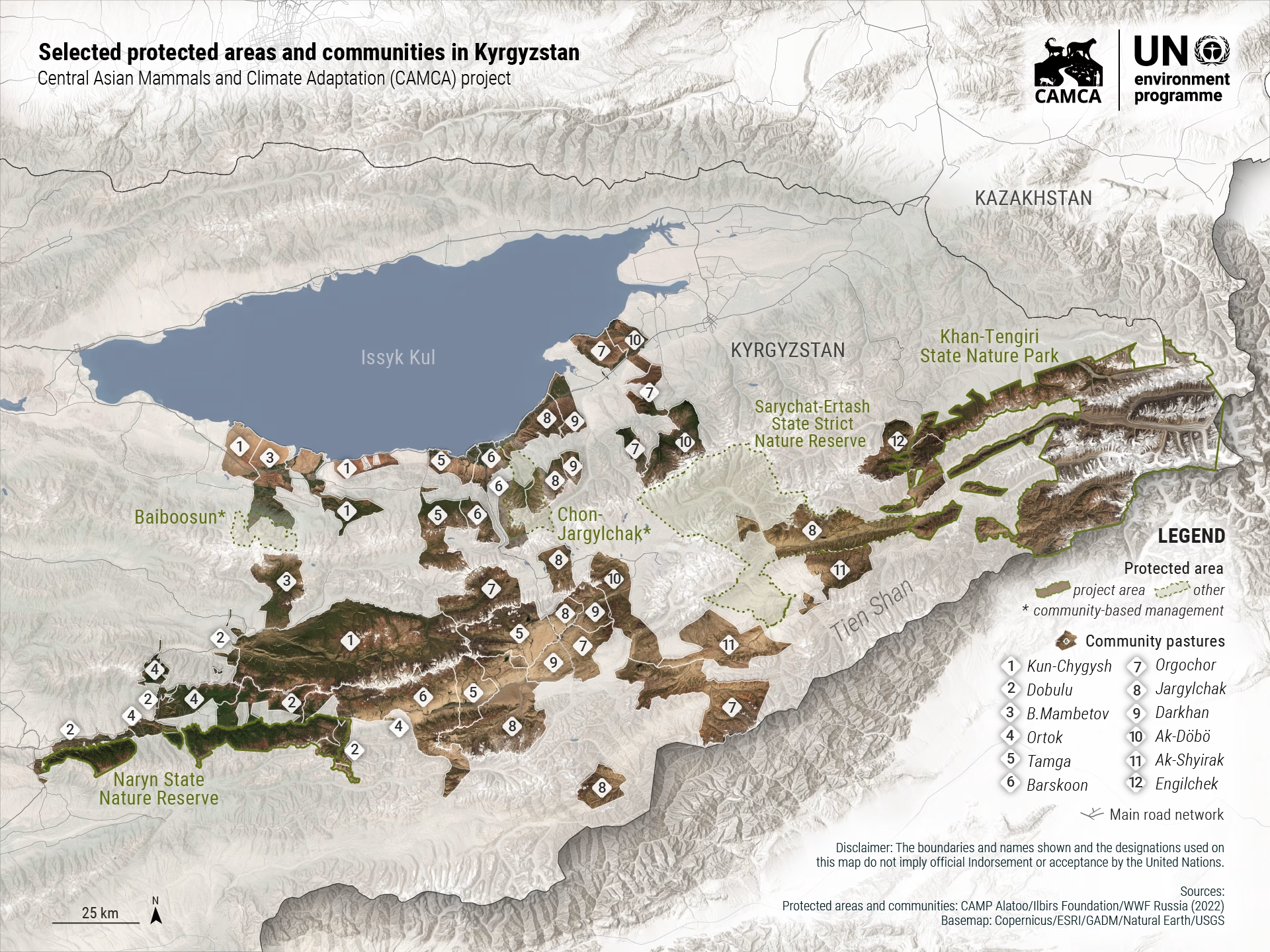
Established in 2016, Khan-Tengri State Nature Park spans over 275 000 hectares of rugged, high-altitude terrain in eastern Kyrgyzstan. Popular among the mountaineering community, Khan Tengiri (“Lord of the Skies”) has a glacial cap at an elevation just over 7000 meters and contains part of the third largest glacier outside of the polar regions – Southern Inylchek (behind Fedchenko in Tajikistan and Siachen on the Indian-Pakistani border). The park’s mountainous landscape provides critical habitats for endangered species such as the snow leopard (Panthera uncia), argali sheep (Ovis ammon) and Asiatic ibex (Capra sibirica). Alongside biodiversity protection, the park places strong emphasis on involving local communities in conservation activities.
Biodiversity and conservation
Khan-Tengri State Nature Park is recognized as one of 20 key areas identified by The Global Snow Leopard and Ecosystem Protection Program as critical to support the snow leopard’s range.
Its remote habitats support important prey species and provide safe corridors for wide-ranging wildlife. Ongoing conservation efforts focus on habitat protection, anti-poaching measures, and strengthening ecological connectivity with neighbouring protected areas. The Ministry of Natural Resources, Ecology and Technical Supervision emphasizes that the conservation of wildlife and rare species such as snow leopards and lynxes remains a national priority, with camera trapping serving as an effective tool for observing and protecting wildlife populations.





Climate impacts and threats
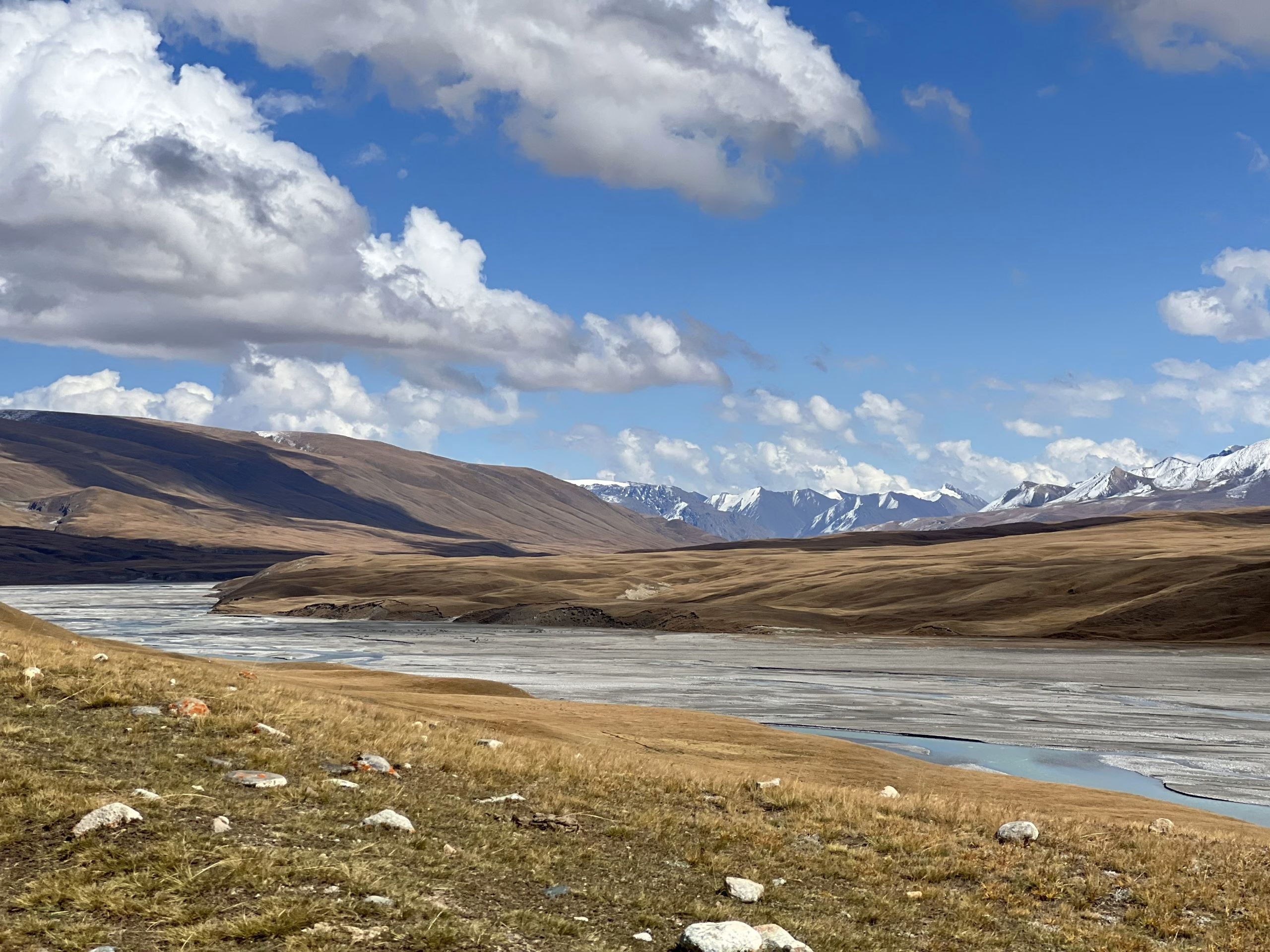
Like other high mountain ecosystems, rising temperatures and shifting seasonal patterns are altering snow cover and glacier dynamics, affecting the timing and availability of water resources. Combined with expanding livestock grazing and overgrazing, this can intensify competition with wild herbivores, degrade habitats, and fragment already vulnerable landscapes, reducing connectivity for species movement. These pressures are particularly significant in Kyrgyzstan’s protected areas, where extreme seasonal variation already shapes fragile high-altitude ecosystems.
Looking ahead
Eco-tourism can offer a powerful way to link conservation with local livelihoods, ensuring that protecting nature also brings tangible benefits to communities. In Khan-Tengri State Nature Park, the Ilbirs Foundation has developed eco-friendly routes that create income opportunities for local guesthouses, guides, and small businesses while promoting sustainable use of natural resources. Visitors are accompanied by park rangers, who share knowledge about protecting vulnerable species and habitats, turning each journey into an educational experience. Portions of tourism revenue are reinvested into both park management and the local community.
New monitoring approaches are also being developed to strengthen conservation planning, including the Protected Area Vulnerability Assessment or “PAVA tool” developed through the CAMCA project. This tool was developed to assess how vulnerable protected areas are to climate change with the aim of identifying priority risks and improving resilience in planning and management. The tool has been tested in the Khan-Tengri State Nature Park, where staff highlighted increasing climate-related hazards such as landslides and avalanches.
CAMCA (2025). Addressing the impacts of climate change on mountain wildlife and communities – Kyrgyzstan. Policy brief. Available at: https://camcaproject.org/product/policy-brief-kyrgyzstan/
CAMCA (2026). Pilot-testing the New PAVA Tool. Available at: https://camcaproject.org/pilot-testing-the-new-pava-tool/ (Accessed 27 April 2026).
Ilbirs Foundation (2025). The Ilbirs Foundation launches a new eco-tourism route in Khan-Teniri National Park. Available at: https://ilbirs.org/english/news-2/the-ilbirs-foundation-launches-a-new-eco-tourism-route-in-khan-teniri-national-park
Michel, S. (2025). Mapping Transboundary Conservation Hotspots for the Central Asian Mammals Initiative. Central Asian Mammals Initiative CMS. Ailable at: https://www.researchgate.net/publication/399552656_Mapping_Transboundary_Conservation_Hotspots_for_the_Central_Asian_Mammals_Initiative/citations
Единый портал государственных органов Кыргызской Республики (2026). Новые кадры дикой природы Государственного природного парка «Хан-Тенири» [In Russian]. Available at: https://egov.kg/ru/ministry/34/news/20237 (Accessed 27 April 2026).
United Nations Development Programme (2025). Biodiversity as a basis for sustainable development of the country. UNDP Kyrgyzstan.Available at: https://www.undp.org/kyrgyzstan/news/biodiversity-basis-sustainable-development-country (Accessed: 24 April 2026)
Государственное агентство охраны окружающей среды и лесного хозяйства при Правительстве Кыргызской Республики (n.d.). Особо-охраняемые природные территории Кыргызской Республики. [in Russian]. Available at: https://web.archive.org/web/20220110093444/https://fauna.kg/oopt/ (Accessed 27 April 2026).