PANORAMA Solutions
Community-based OECMs and Biodiversity in Kyrgyzstan – PANORAMA
In the mountains of the Kyrgyz Republic, biodiversity conservation is closely linked to the natural resource use practices of local communities, particularly pasture management and hunting. Areas outside formally designated protected areas are especially vulnerable. Despite their ecological importance and economic value to communities, these territories often lack formal protection, systematic monitoring, and adaptive management mechanisms.
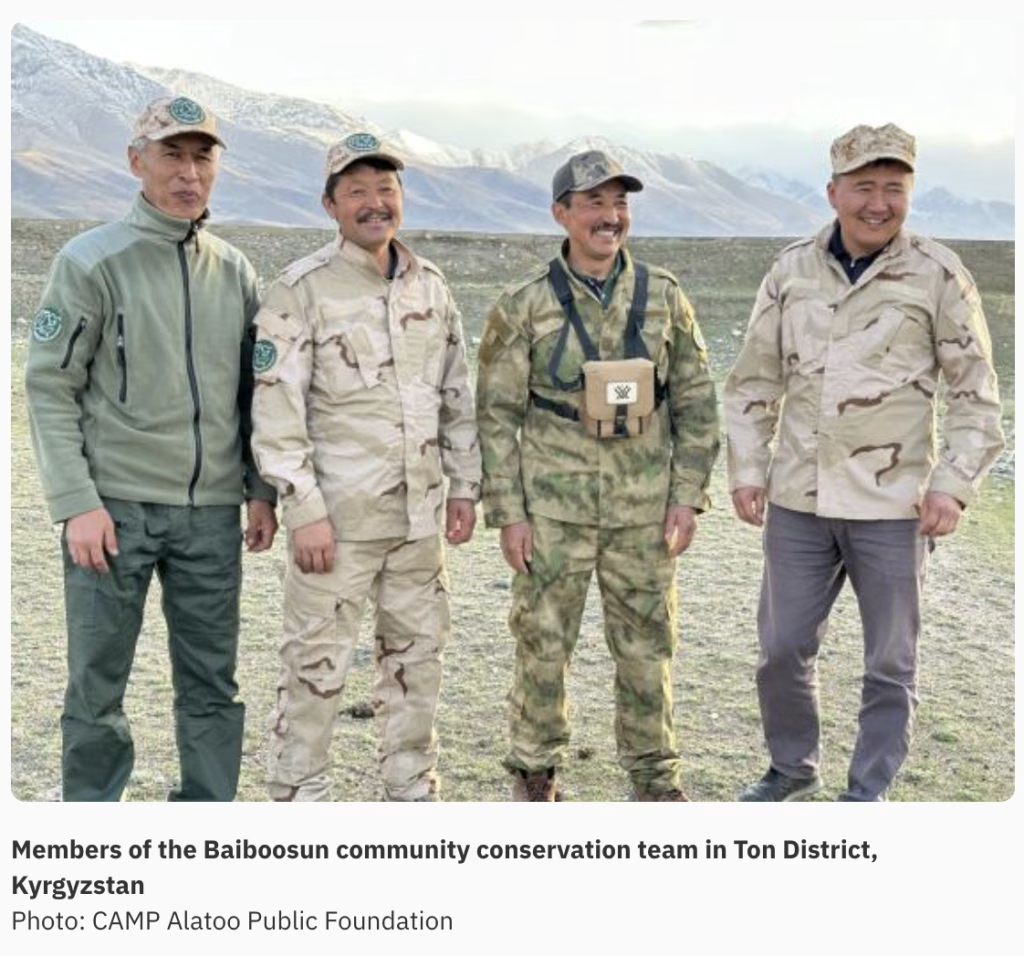
Officially designated in 2025, Baiboosun is a specially protected natural area of local significance and one of the first formally recognized community-managed micro-reserves in Kyrgyzstan. What began in 2019 as a voluntary community initiative responding to declining wildlife populations evolved into a legally institutionalized conservation model covering more than 20,000 hectares of high-mountain, subalpine, and alpine ecosystems. Micro-reserves can help support Kyrgyzstan’s commitment to protect 30% of its territory by 2030.
PANORAMA Repurposing old wells in Ile-Balkhash – Kazakhstan
Since 2018, as part of the “INtroduction of the Amur tiger tot he Ile River Delta”, Bukhara deer has been actively reintroduced to the rezervat (through joint efforts of WWF and the Kazakh government). The current population is estimated at 200 individuals, however, maintaining a stable population is challenging due to prolonged drought stressing important forage species. Bukhara deer also require access to freshwater, and Lake Balkhash is highly saline. To address these issues, ACBK, in collaboration with staff the nature rezervat and experts from the Institute of Zoology Kazakhstan, worked to repurpose drinking water wells originally developed during the soviet era for geo-exploration to be used as wildlife watering holes. More than 50 years have passed since the wells were drilled, and 2 wells were restored in areas with high deer concentrations. Pumping equipment is powered by solar panels and, although it can be fully automated remotely. Rezervat staff can monitor wells during their routine inspections.
PANORAMA Solution: Mountain Tourism in Kyrgyzstan
In Kyrgyzstan, livestock herding remains a cornerstone of rural livelihoods, yet inefficient resource use and unsustainable herd sizes are accelerating land degradation, increasing greenhouse gas emissions, and creating environmental and public health risks—all of which heighten the impacts of climate change. Ecotourism is often presented as a complementary livelihood option, but it also comes with its own set of challenges. These include ensuring that tours respect nature and do not harm protected areas, difficulties in connecting tour operators with new or remote destinations, limited local services and marketing capacity, and ensuring that tourism activities genuinely support conservation efforts.
Wildlife-Friendly Pasture Management in Kyrgyzstan – PANORAMA
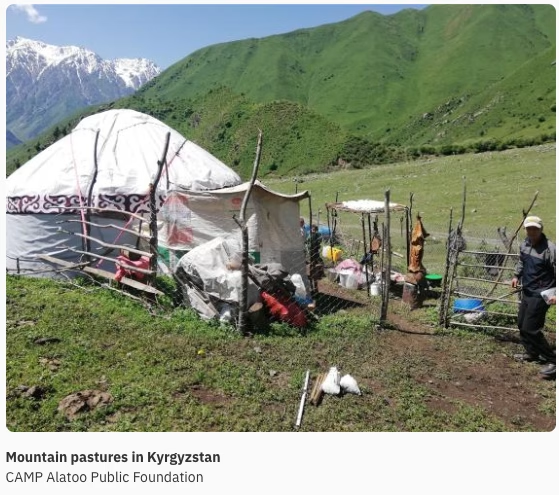
In the Kyrgyz Republic, pastures cover about 89% of agricultural land, and livestock production is a key sector and main source of income for rural communities. Over the past 20 years, livestock numbers have increased significantly, placing growing pressure on pasture ecosystems and leading to declining productivity. Climate change, including more frequent droughts and shifting precipitation patterns, further exacerbates these challenges. In response, a pasture management model was developed based on improved data collection and alignment of sustainable livestock use with biodiversity conservation. The model combines participatory data collection, pasture carrying capacity assessments, integration of ecological corridors into pasture planning, introduction of ecological thresholds, and regular monitoring with adaptive management. This integrated approach reduces pressure on pastures, enhances climate resilience, and balances livestock production with wildlife and ecosystem sustainability.