Where do human – wildlife conflicts occur? Findings from a winter livestock camp assessment in the Ak Ilbirs Ecological Corridor
The high-mountain landscapes of Kyrgyzstan are home not only to people and their livestock, but also to a wide range of wildlife, including wolves and snow leopards. In these harsh environments, people and wildlife share the same space; their interactions can sometimes lead to conflict.
To better understand the scale of these conflicts and identify which areas face the highest level of risk, specialists from the Ilbirs Foundation conducted an assessment of winter livestock camps in early 2026 within the “Ak Ilbirs” Ecological Corridor and adjacent areas of Issyk-Kul and Naryn provinces.
Why study winter livestock camps?
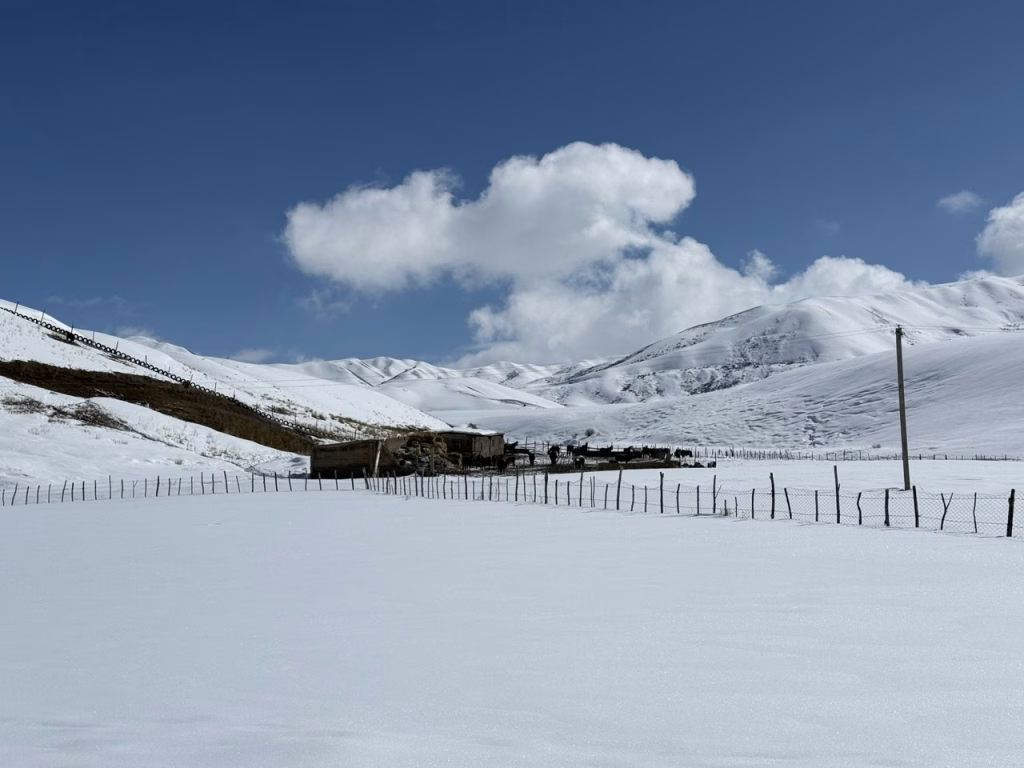
Winter livestock camps are a key component of traditional pastoral livelihoods in Kyrgyzstan. During the cold season, livestock are concentrated at these sites, where herders face some of the most significant challenges, including harsh weather conditions, limited forage resources, disease, and predator attacks.
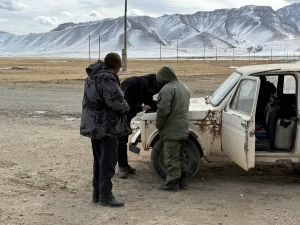
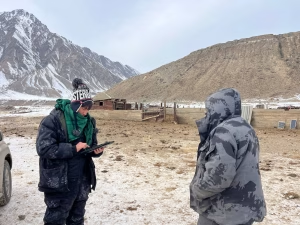
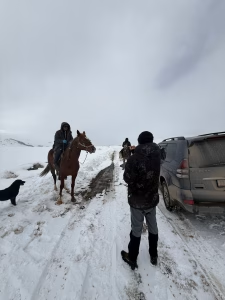
Interviews were conducted with owners and users of 88 winter livestock camps located in the high-altitude zones of Issyk-Kul and Naryn provinces. Despite the severe weather, deep snow cover, and difficulty in accessing remote areas, the team was able to collect data from nearly the entire study area.
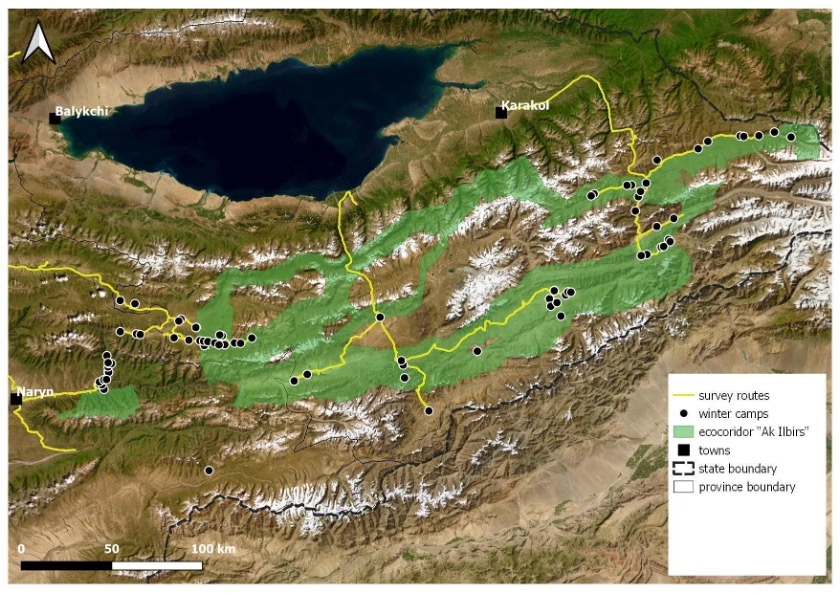
Winter camps for which data were collected through interviews and survey routes driven in January-March 2026.
The decision to conduct the assessment during winter was intentional. At this time of year, livestock and herders remain at winter camps, allowing researchers to obtain the most accurate information on herd composition, livestock numbers, and management practices. Winter conditions also provide a valuable opportunity to assess the quality of livestock enclosures and other infrastructure during the most challenging period of the year.
In parallel with the interviews, the team mapped winter camp locations, recorded geographic coordinates, and documented site condition with photographs. These data will contribute to a broader understanding of interactions between people, livestock, and wildlife within the “Ak Ilbirs” Ecological Corridor.
Assessing the risk of human–wildlife conflict
One of the objectives of the study was to identify factors contributing to human – wildlife conflict.
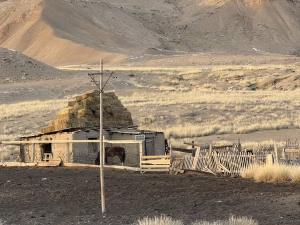
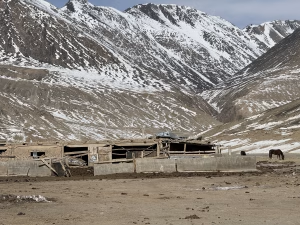
During interviews, researchers collected information on predator attacks, livestock numbers, enclosure types, and the condition of protective infrastructure. Each enclosure type was assigned a category based on the quality of the structure, from semi-permanent, partially roofed and well-fenced to temporary, no-roofed and poor fencing. Winter camps as a whole were also ranked based on the number of reported predator attacks, with higher scores given to camps with higher numbers of predator attacks.
Using these indicators, a conflict score was calculated for each winter camp. The score reflects the relative level of risk associated with human–wildlife conflict. Higher scores indicate a greater likelihood of livestock losses and a stronger need for preventive measures.
| Type of enclosure | Description | Number | Protection score |
| partially roofed, very well fenced | A 2-3 m high fence, with an outward-bend top section, with no holes or gaps. Should usually prevent snow leopards and lynx from entry. | x | x |
| partially roofed, well fenced | A strong fence, however, is not strong enough to stop large cats from entering. | x | x |
| no roof, well fenced | Same as above, with no roof to shelter animals. | x | x |
| partially roofed, average fencing | Strong fence, with holes or gaps, which may allow predators, including wolves, to enter. | x | x |
| no roof, average fencing | Same as above, with no roof to shelter animals. | x | x |
| partially roofed, poorly fenced | Poorly constructed enclosure, low fencing is often made of scrap metal, dried dung bricks or stones. Easy for any predator to enter. | x | x |
| no roof, poorly fenced | Same as above, with no roof to shelter animals. | x | x |
What did the assessment reveal?
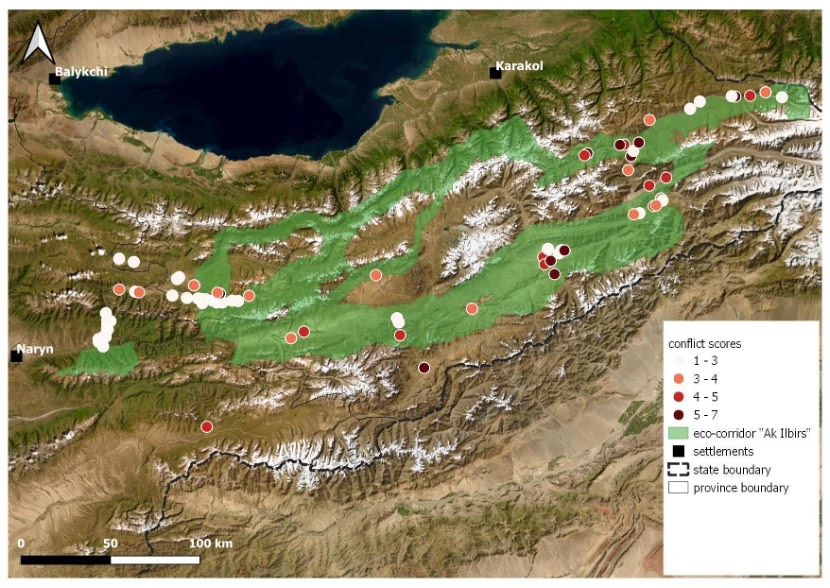
Winter camps surveyed during interviews, colored according to the conflict scores assigned to them. Darker colored circles represent camps with higher conflict scores.
The resulting map highlights areas where risks are highest and where conservation and livestock protection measures may be needed most. Elevated conflict scores are typically associated with a combination of predator activity and insufficiently secure livestock enclosures, not simply a lack of protection or exposure to predators alone.
The results confirmed that livestock husbandry remains the foundation of local livelihoods in Kyrgyzstan’s high-mountain regions. Across the surveyed camps, researchers recorded more than 9,700 sheep, approximately 5,100 yaks, over 1,400 horses, around 750 cattle, and more than 600 goats.
Yaks continue to play a particularly important role in high-altitude areas due to their adaptation to harsh mountain conditions and their economic value to local communities.
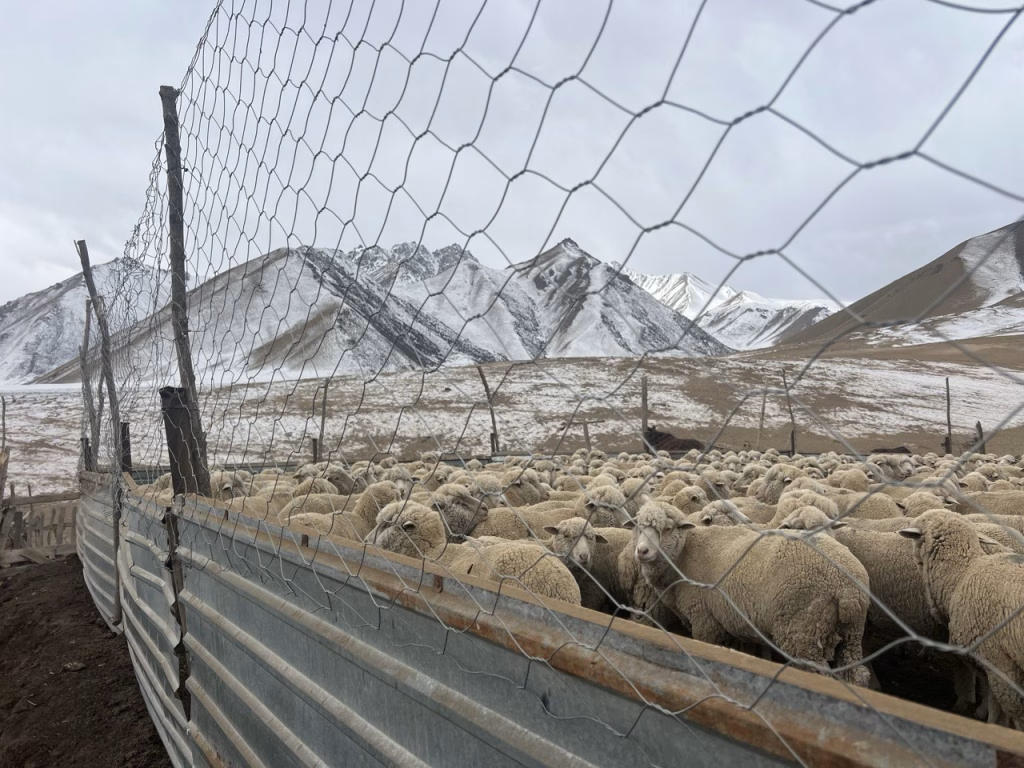
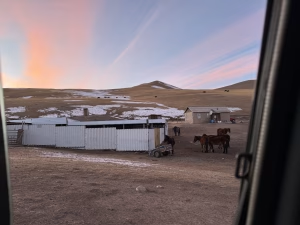
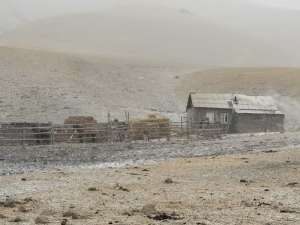
The assessment also revealed considerable variation in the quality of livestock protection infrastructure. Some camps use well-constructed enclosures that effectively reduce the risk of predator attacks, while others rely on weaker structures that leave livestock more vulnerable.
Wolves, snow leopards, and other challenges
Predator attacks were among the most frequently reported concerns during interviews. Wolves were identified as the primary predator affecting livestock, while snow leopard attacks were also reported regularly across the study area. Less frequently reported predators included bears, lynx, and jackals.
The assessment demonstrated that the risk of conflict depends not only on the presence of predators but also on livestock management practices, enclosure quality, and the level of supervision provided during grazing.
Beyond Predators: The Challenge of Livestock Disease
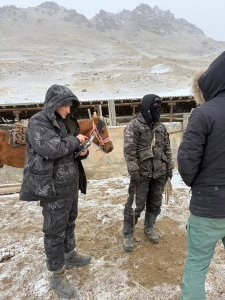
Livestock disease emerged as another important concern for herders. Many respondents reported disease outbreaks and livestock mortality that resulted in economic losses for their households, although it was not always possible to identify the specific disease.
The findings suggest that combining effective livestock protection, reliable veterinary support, and sustainable pasture management can significantly improve the resilience of livestock production systems in Kyrgyzstan’s high-mountain regions.
Why does this matter for the “Ak Ilbirs” ecological corridor?
The “Ak Ilbirs” ecological corridor was established to facilitate the safe movement of wildlife between Khan-Tengiri State Nature Park and Sarychat-Ertash State Nature Reserve.
However, biodiversity conservation cannot be achieved without considering the needs of the people who live and work within these landscapes. Understanding the drivers of human–wildlife conflict is therefore an essential component of effective corridor management.
The data collected through this assessment help improve our understanding of where the risks of human-wildlife conflict are highest, which factors contribute to those risks, and which measures may help reduce them. The findings may prove valuable for future conservation planning, the development of livestock protection measures, and efforts aimed at reducing conflicts between people and wildlife.
In the long term, studies of this kind may contribute both to the conservation of rare species, including the snow leopard, and to strengthening the resilience of local communities whose livelihoods are closely linked to Kyrgyzstan’s mountain ecosystems.